Monetizing Digital Art: How Designers Use Patreon and Ko-fi
Digital platforms like Patreon and Ko-fi have emerged as transformative tools for artists and creators, allowing them to bypass traditional agency-based funding models. This shift aligns with broader changes in the creator economy, where direct audience support is a primary source of income. Jack Conte, the founder of Patreon, describes this model as fostering a "Creative Middle Class," where artists can earn sustainable incomes without relying heavily on ad revenue or large-scale commercial sponsorships. These platforms empower creators to maintain control over their output while connecting directly with their supporters (Conte, 2014; Stanford CCRMA, 2014).
Mechanisms of Monetization
Patreon offers a subscription model where fans contribute recurring payments in exchange for exclusive content. This model incentivizes creators to cultivate a personal connection with their audience, building trust and fostering long-term support (Columbia Business School, 2023). Ko-fi operates with a "tip jar" mechanism and one-time payments, ideal for creators who prefer flexibility or supplementary income sources. Both platforms have tailored their features to encourage accessibility and scalability, catering to creators of varying experience levels and audience sizes (Ko-fi, 2023; Patreon, 2023).
Creator Challenges and Strategies
Artists on these platforms often face challenges such as burnout, algorithmic unpredictability, and the need to consistently produce content that resonates with their audience. Research highlights the psychological pressures creators experience, particularly when transitioning from hobbyists to full-time professionals (Arriagada & Ibáñez, 2020). Strategies to mitigate these challenges include diversifying income streams, engaging in cross-platform promotion, and experimenting with tiered rewards to balance accessibility with exclusivity (Columbia Business School, 2023).
Successful creators leverage storytelling and brand authenticity to enhance their appeal. Studies indicate that audiences are drawn to content that feels genuine and aligns with their values, though balancing this with financial incentives requires careful planning (Gerrath & Usrey, 2021). For example, creators often integrate their personal narratives into their content, fostering a deeper connection with supporters (Stanford CCRMA, 2014).
Economic Implications
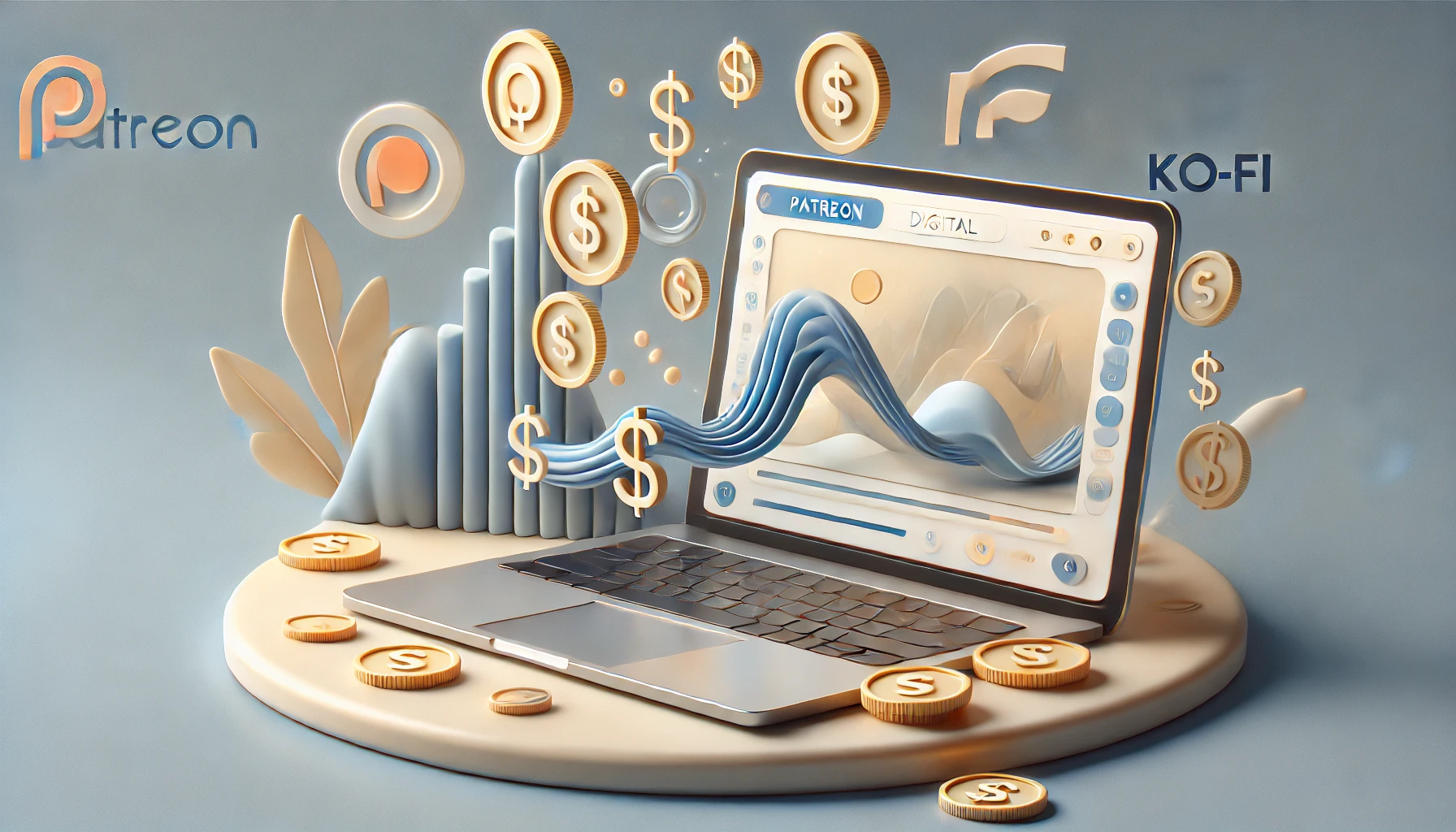
These platforms exemplify a shift in consumer behavior and content monetization. Unlike traditional models reliant on external gatekeepers, Patreon and Ko-fi empower artists to dictate their creative and financial terms. This autonomy challenges established notions of artistic success, focusing instead on microeconomies where smaller audiences provide sufficient income (Columbia Business School, 2023).
The freemium and subscription models employed by these platforms reflect broader trends in digital content monetization, enabling creators to balance free public content with paid exclusives. These approaches help them retain casual followers while encouraging dedicated fans to invest financially in their work (Rietveld & Schilling, 2021).
Conclusion
Platforms like Patreon and Ko-fi are reshaping how digital artists generate income, offering new opportunities to sustain their practices independently of traditional systems. By prioritizing direct engagement and creative freedom, these platforms highlight a growing ecosystem where creators and audiences collaborate to redefine artistic success in the digital age.
Refrences:




AI's Used:

Text Generated by ChatGPT
Images Generated by ChatGPT and Perchance AI Image Generator
Webpage Hand Codded by Jade.G