Rethinking Photography in the Age of Artificial Intelligence
Photography has long been understood as an art of witnessing—an act rooted in presence, light, and lived experience. A photograph, in its traditional definition, bears the imprint of a moment: the flicker of atmosphere, the emotional resonance of a scene, and the unique human perspective behind the lens. Yet the rapid emergence of artificial intelligence has dramatically expanded the boundaries of photographic practice. Increasingly, artists use AI not merely as a tool for editing but as a collaborator in shaping, imagining, or even generating images. This shift raises foundational questions: What does it mean to “take” a photograph when the image may be produced by an algorithm? Where does authorship reside when the human intention and the machine’s computational processes intertwine? How does the definition of photography expand—or fracture—under the pressures of AI?
These questions formed the basis of the “Who Took This Photo?” experiment, which explored the nature of hybrid authorship between humans and AI. This investigation proposed that while AI can generate images, transform photographs, or hallucinate scenes from data, the human artist remains the origin of intent, emotion, and narrative. The machine becomes an interpretive device—an extension of imagination rather than a replacement for it. The resulting image thus occupies an in-between space: no longer solely photographic but not entirely synthetic. It becomes a hybrid form of visual authorship, co-constructed by human experience and machine intelligence. This essay expands on that conceptual foundation by examining how contemporary artists use specific technical, aesthetic, and conceptual strategies to blend photography with AI tools, and how these approaches collectively reshape the limits of photographic practice.
Hybrid Strategies in Contemporary AI-Based Photography
The blending of photography and AI is not a single technique but an entire ecosystem of creative strategies. While some artists use AI subtly—as a method of enhancing lighting or color—others build entire worlds that exist only in synthetic space. A common strategy involves dataset curation, where the artist gathers images to train or condition AI models. Instead of shooting a single photograph, the artist curates thousands or even millions of images, shaping how the model “sees.” Another strategy is photo-to-AI transformation, in which the artist feeds photographs into AI systems to generate recomposed, stylized, or hybrid images. These workflows—shooting, scanning, transforming, re-photographing—create iterative loops that blur the line between camera and algorithm.
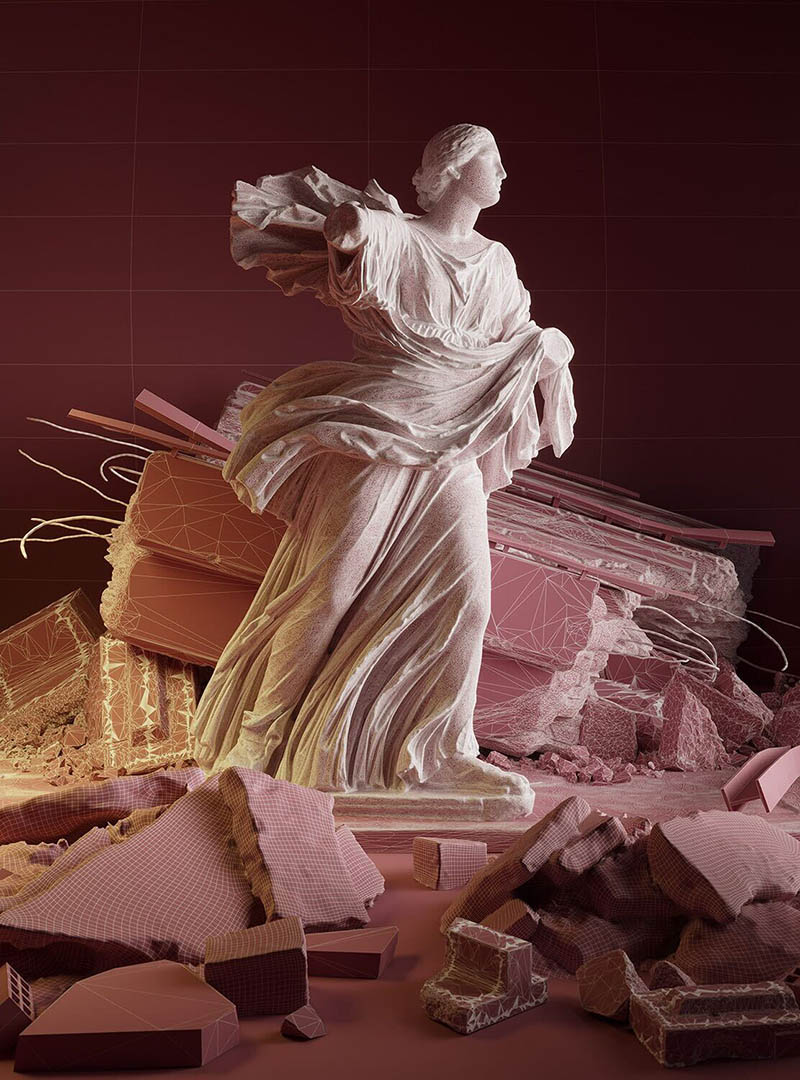
Some artists practice simulation and AI-staged photography, designing three-dimensional environments that are photographed not with a physical camera but with a virtual one. Others use AI for identity-based portraiture, creating faces or bodies that never existed but feel deeply photographic. Many rely on GAN-based recomposition, allowing AI to generate new images from photographic datasets. Beyond still images, artists animate photographic datasets into immersive projections or moving “data sculptures.” Additional strategies include hybrid collage, speculative photography, and memory reconstruction, producing images that feel like recovered memories even though they are computational inventions. In each case, the artist’s authorship shifts from capturing the world to constructing, curating, or interrogating it through algorithmic processes.
Artist Case Studies: Hybrid Authorship in Practice
The strategies outlined above take on specific forms in the work of the ten artists assigned in the course. Together, they demonstrate the wide spectrum of contemporary approaches to AI-enhanced photography.
Sofia Crespo: Synthetic Species and Photographic Nature Dreams
Sofia Crespo explores the relationship between biological life and computational perception. Her work relies heavily on dataset curation and GAN-based recomposition, using archives of natural imagery—corals, insects, leaves, marine life—as raw material. In Neural Zoo (2018–2020), Crespo trained AI models on collections of biological photographs, generating fantastical organisms that appear both impossibly alien and eerily plausible. These hybrid creatures evoke scientific specimen photography but depict species that never existed. In Artificial Remnants, Crespo extends this visual language to create AI-generated insects accompanied by fabricated scientific descriptions. Her series Critically Extant addresses gaps in ecological data by generating distorted images of endangered species whose photographic documentation is incomplete. Crespo’s work demonstrates how AI can extend the tradition of nature photography, transforming it from the documentation of life into the speculative construction of it.

Boris Eldagsen: Pseudomnesia and the Critique of Photographic Truth
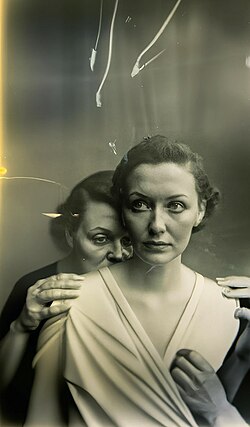
Boris Eldagsen exposes the instability of photographic truth in the age of AI. His Pseudomnesia series consists of black-and-white, vintage-style images that imitate mid-twentieth-century analog photography yet depict people and events that never existed. These images provoke a haunting sense of nostalgia, as if they were recovered family photographs from a forgotten archive. Eldagsen’s most well-known contribution to the discourse came when he submitted an AI-generated image, The Electrician, to the Sony World Photography Awards. After winning, he publicly rejected the prize, arguing that the contest had failed to develop criteria distinguishing between photographs and AI-generated imagery. Eldagsen’s work uses AI not merely to produce images but to challenge institutions to reconsider the very category of “photography.” His practice exemplifies hybrid authorship as a conceptual tool for exposing social assumptions about memory, authenticity, and evidence.
Giuseppe Lo Schiavo: Synthetic Photography and Virtual Light
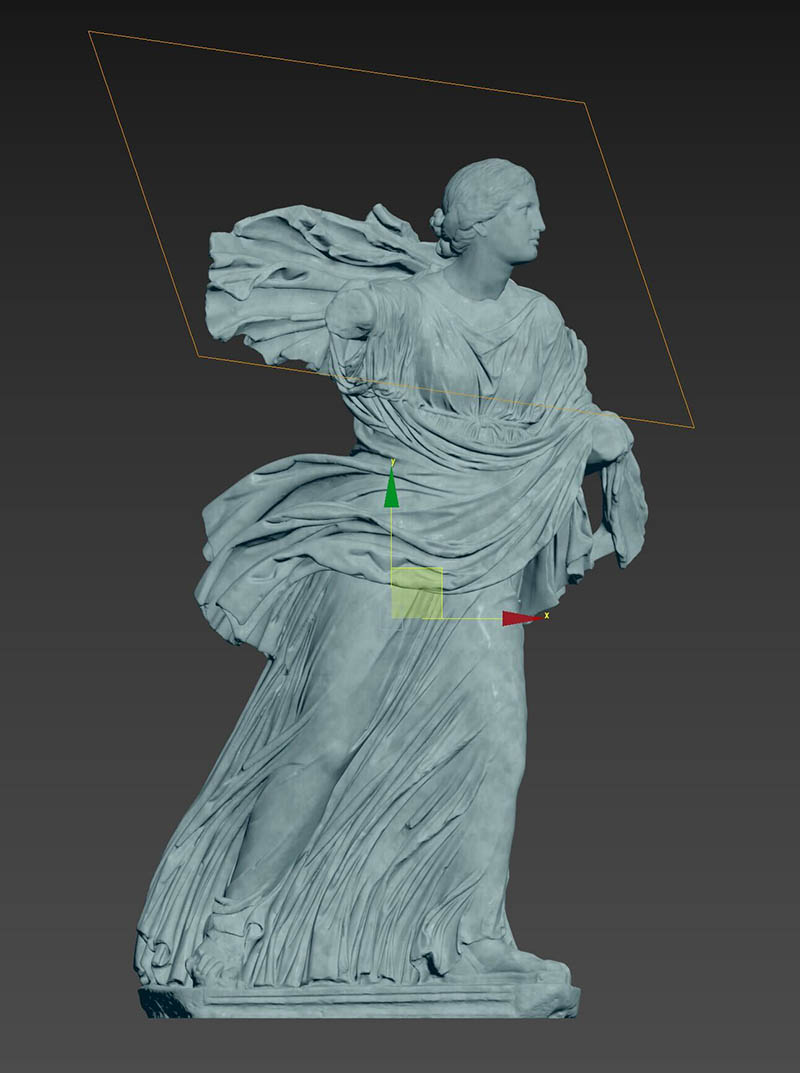
Giuseppe Lo Schiavo describes his practice as “synthetic photography.” Rather than using a physical camera, he constructs entire scenes in 3D virtual environments, simulating lighting, texture, and spatial composition with extraordinary precision. These scenes are then “photographed” within the software. The resulting images possess the clarity and formal rigor of high-end studio photography, yet the subjects—floating figures, impossible architectures, surreal artifacts—exist only as simulations. Lo Schiavo’s work raises profound questions about what makes an image a photograph. If photography is defined by capturing light, does simulated light count? And if photography is defined by a document of reality, what happens when reality is virtual? His work suggests that photography has evolved into a visual language no longer dependent on a camera.
Jake Elwes: Queering Datasets and Rethinking Identity
Jake Elwes uses AI to explore issues of identity, representation, and bias. His Zizi Project and Zizi – Queering the Dataset use machine learning models trained on drag performances and queer culture. By inserting drag bodies into training data typically dominated by normative gender expressions, Elwes queers the dataset itself. He generates deepfake-like synthetic performers that destabilize AI’s rigid categories of gender and identity. Elwes’s work shows that hybrid authorship is not only a technical process but a political one: the images produced reveal how datasets encode social norms, and how artists can intervene to make those systems more inclusive.

Gretchen Andrew: Search Engines as Visual Ecosystems
Gretchen Andrew extends photographic hybridity into the realm of search engines and networked visibility. Her work blends photography, collage, text, and digital screenshots with algorithmic manipulation. In her “search engine art,” Andrew uses SEO tactics to push her images to the top of Google search results for terms such as “next American president” or prestigious art exhibitions. The work becomes photographic not because of the image alone but because of the way the image circulates through algorithmic infrastructures. For Andrew, authorship involves understanding not only how images are made but how they are ranked, sorted, and shown. This strategy expands photography into a socio-technical practice mediated by visibility algorithms.

Kevin Abosch: Portraiture, Value, and Machine Perception
Kevin Abosch is known for his conceptual portraiture, which he extends into machine learning and blockchain systems. His portrait projects often begin with traditional photographic sessions but evolve into data-driven abstractions. In some works, the human face becomes an abstracted digital asset, minted as a token on blockchain networks. Abosch investigates how identity and value become intertwined within technological systems. His hybrid approach—combining the photographic logic of portraiture with AI’s analytic abstraction—highlights how images participate in economies of identity, commodification, and speculation.

Mario Klingemann: Artificial Intelligence and the Art of Machine Imagination
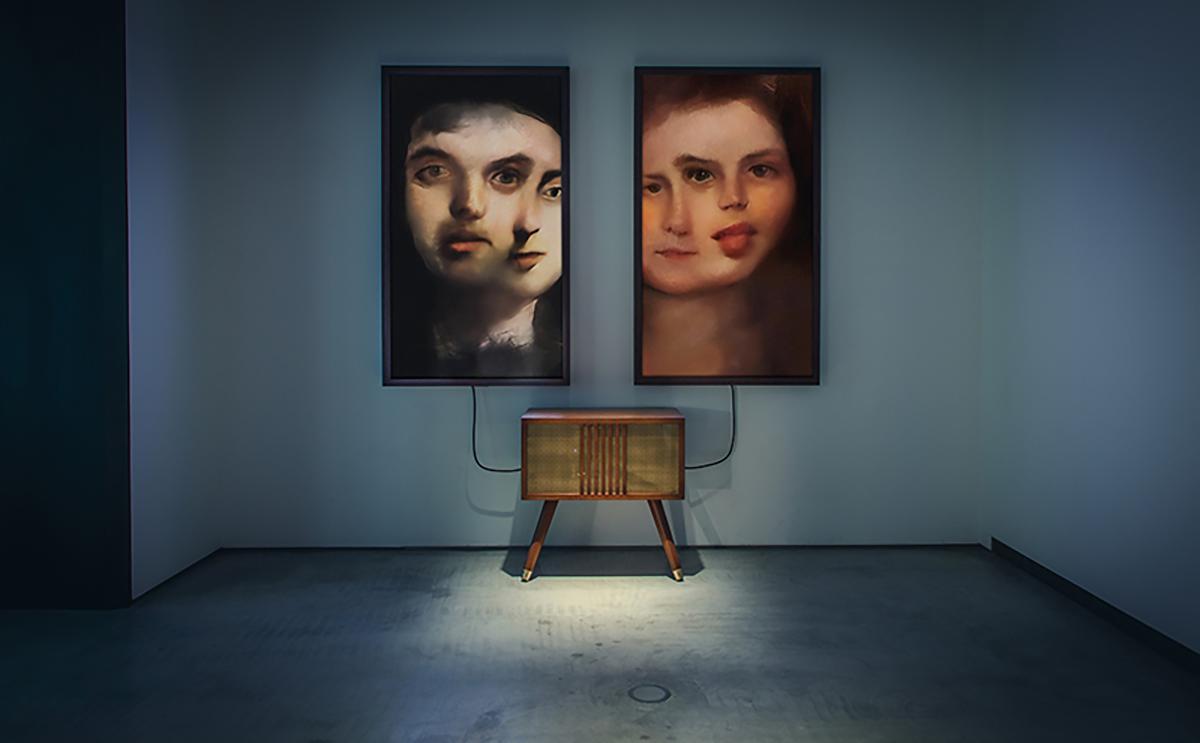
Mario Klingemann is a pioneer of AI-based art whose work demonstrates hybrid authorship at its most experimental. Trained on vast datasets of photographs, paintings, and internet images, his neural models generate uncanny portraits and endlessly morphing compositions. Klingemann often works with photographic archives, manipulating and reinterpreting them through neural networks that “imagine” new identities and forms. His live neural performances reveal the internal logic of machine imagination, making authorship a negotiation between human selection and machine variation.
Farah Al Qasimi: Everyday Life and Quietly Speculative Narratives
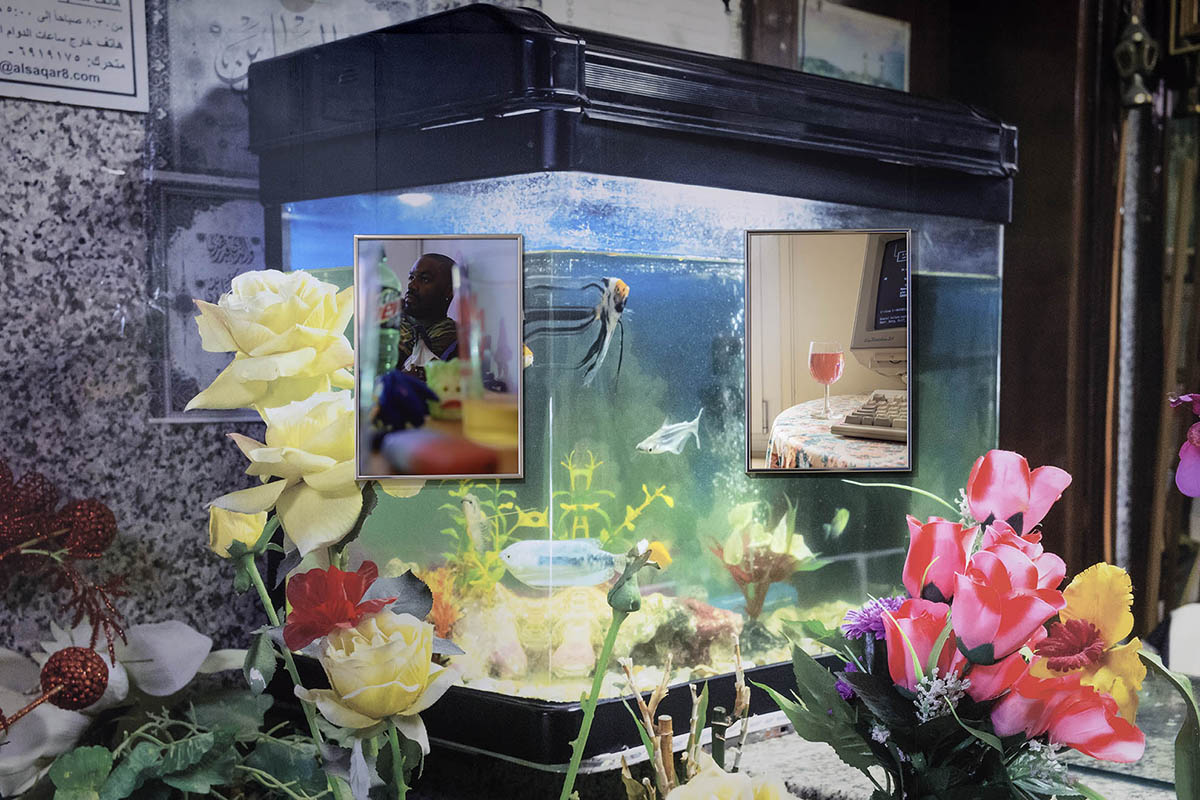
Farah Al Qasimi blends documentary photography with subtle AI-driven speculation. In projects such as Aquarium for Google’s “Speculative Photos” initiative, she stages real scenes and then uses AI-assisted tools to imagine alternative emotional states or narrative implications. Her photographs remain anchored in real environments—homes, shops, domestic interiors—yet AI becomes a quiet layer that alters interpretation. Al Qasimi’s work shows how AI can enrich, rather than replace, documentary photography by introducing new layers of meaning and relational complexity.
Charlie Engman: Cursed Images and Fragmented Memory
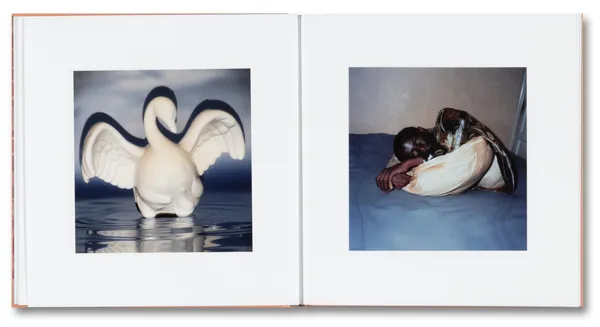
Charlie Engman works with personal photographic archives, especially images of his mother, which he feeds into AI systems to produce distorted, eerie, or “cursed” images. In his book Cursed, Engman uses AI to manipulate familiar scenes into uncanny hybrids. Bodies melt into objects; identities fracture; animals fuse with human figures. These images feel like memories gone wrong, hallucinations of the past rather than representations of it. Engman’s hybrid authorship deliberately breaks photographic coherence to reveal the alien logic of machine perception and the emotional instability of memory itself.
Refik Anadol: Data Sculptures and Machine Dreams
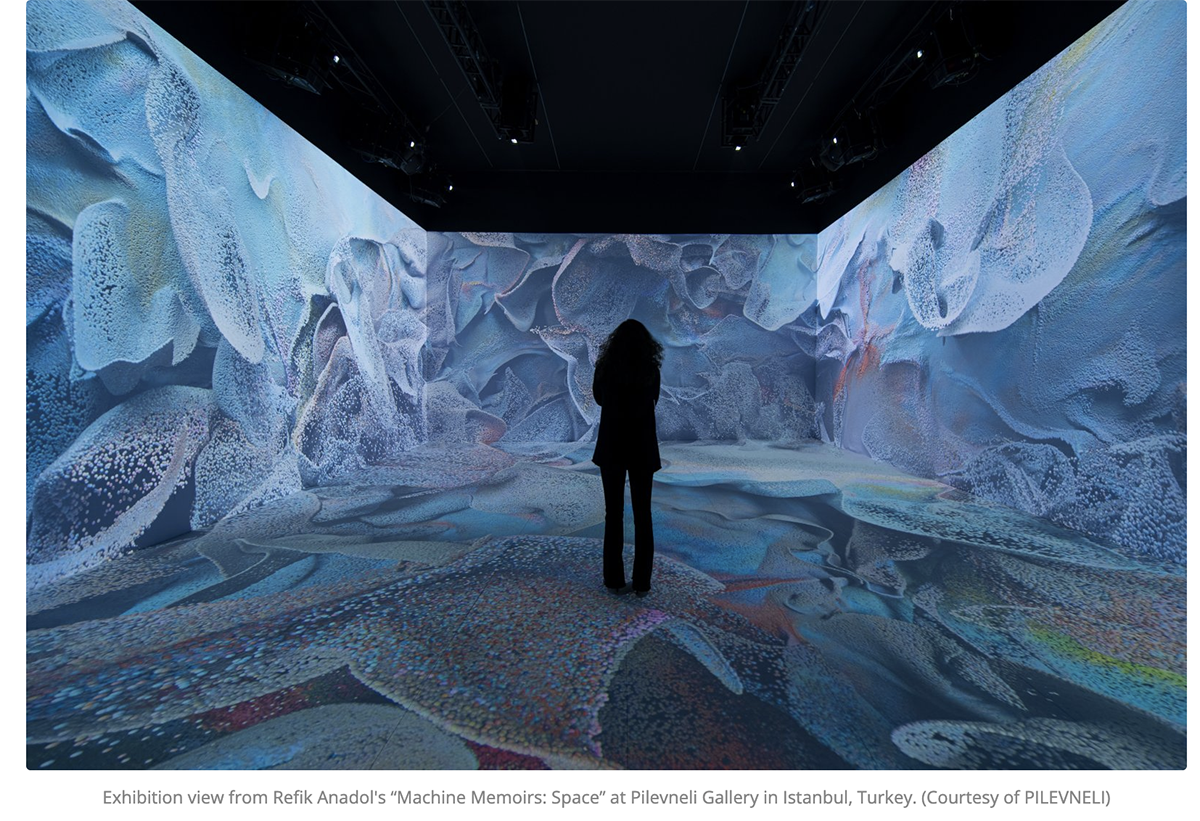
Refik Anadol’s large-scale installations redefine photography as collective image memory. In Machine Hallucinations: Nature Dreams, Anadol trained AI on hundreds of millions of nature photographs, producing immersive moving “data sculptures” that visualize how machines might dream of the natural world. In Unsupervised — Machine Hallucinations — MoMA, he used over 138,000 images from the museum’s archive to generate a dynamic portrait of the institution’s visual memory. Anadol treats photographs not as individual images but as vast datasets that can be recomposed, animated, and reinterpreted. His work represents hybrid authorship at its most expansive: the artist becomes a curator of data, a conductor directing the machine’s seeing.
We chose to focus on Anadol in particular because his projects sit at the center of the questions posed by “Who Took This Photo?” His work maintains a deep connection to photographic material while clearly demonstrating how AI can transform archives into living, evolving forms. The emotional and conceptual direction still begins with the artist, even when the imagery is generated by machine learning models. Anadol’s practice emphasizes that AI does not erase the photographer’s role—it magnifies their capacity to shape how images, memories, and institutions are seen.
Synthesis: Patterns, Categories, and the Expansion of Photography
Across these ten artists, several patterns emerge. First, the shift from single photographs to curated datasets marks a fundamental transformation in photographic practice. Artists increasingly treat images as training material, shaping how AI systems represent the world. Second, many works blur the line between documentation and speculation. Whether constructing synthetic species (Crespo), inventing pseudo-memories (Eldagsen), or reimagining domestic scenes (Al Qasimi), artists use AI to propose what could exist rather than merely record what does. Third, authorship becomes distributed across humans, machines, institutions, and platform infrastructures. Gretchen Andrew manipulates visibility algorithms; Max de Esteban critiques the politico-economic forces behind AI; Anadol collaborates with engineers, curators, and datasets compiled by institutions. Finally, the nature of the photographic image shifts from fixed exposure to dynamic transformation. AI allows images to move, evolve, and recombine across time.
These patterns can be grouped into three overarching categories. Technically, artists engage with dataset curation, simulation, model training, and platform manipulation. Conceptually, they explore memory, authenticity, representation, and systemic critique. Aesthetically, they generate photorealistic nostalgia, synthetic surrealism, data abstraction, and hybrid collage. Through these strategies, photography expands from a medium of optical recording into a broader system of image construction, data processing, and speculative thought.
Bias, Visibility, and Machine Vision
Artists confronting bias in AI imagery are not only critics but co-designers of perception. They intervene in the algorithmic imagination, revealing how aesthetics emerge from the entanglement of machine training and human oversight. Such work suggests that bias is not something to be erased, but rather made visible and questioned.
Ultimately, creative engagement with bias points toward a new kind of authorship—one grounded in transparency and relational understanding. The artist becomes both subject and researcher of machine vision, helping us see how technology mirrors and magnifies our collective assumptions.
Conclusion: The Future of Hybrid Authorship
Hybrid authorship challenges the foundational assumptions of photography. While early photography promised “this has been,” AI-driven photography proposes alternate formulations: “this could have been,” “this is how a machine sees,” or “this is how a dataset remembers.” Across the artists studied, AI functions not as a replacement for human creativity but as a collaborator—one that brings new forms of perception, computation, and visual logic into the creative process. The photographer becomes a curator, coder, storyteller, and systems thinker.
As AI continues to shape visual culture, photographers and artists will need to cultivate fluency in data ethics, algorithmic systems, and the socio-technical contexts of image production. Hybrid authorship is not merely a new technique but a paradigm shift in how images are made, interpreted, and valued. The future of photography will not be defined by the camera alone but by the dynamic interplay between human intention and machine imagination.
Authors & Sources
Authors: Sam Barclay, Danielle Gilmore, Luke Higgins, Anatolii Liskov, Marine Malisetyan, Rostyslav Mitrianu.
Tools Used: DALL·E 3, Runway ML, ChatGPT
AI Contribution: Text drafted collaboratively with AI and edited by the authors. View AI contribution log
Prompt Logs:
- Rostyslav Mitrianu: Perplexity prompt log
- Anatolii Liskov: ChatGPT log 1, ChatGPT log 2
- Danielle Gilmore: ChatGPT prompt log
- Samuel Barclay: ChatGPT prompt log
- Marine Malisetyan: ChatGPT prompt log
Works Cited:
- Abosch, Kevin. National Gallery of Victoria. www.ngv.vic.gov.au/artists/kevin-abosch/
- Al Qasimi, Farah. "Alternative Images of AI." Google Research Blog. blog.google.
- Anadol, Refik. "Machine Hallucinations: Nature Dreams." Refik Anadol Studio. refikanadol.com.
- Anadol, Refik. "Unsupervised — Machine Hallucinations — MoMA." Refik Anadol Studio. refikanadol.com.
- "A Forest." MUAC: Museo Universitario Arte Contemporáneo. muac.unam.mx.
- Andrew, Gretchen. "Search Engine Art." Fast Company. www.fastcompany.com.
- Crespo, Sofia. "Neural Zoo." AIArtists.org. aiartists.org.
- Crespo, Sofia. "Critically Extant." The End of Knowledge. theendofknowledge.com.
- Danziger Gallery. "Giuseppe Lo Schiavo: Synthetic Photography." Danziger Gallery. www.danzigergallery.com.
- Eldagsen, Boris. "Pseudomnesia." The Overview. www.theoverview.org.
- Eldagsen, Boris. "Sony Award Withdrawal Statement." The Guardian. www.theguardian.com.
- Elwes, Jake. "Zizi – Queering the Dataset." Jake Elwes Studio. jakeelwes.com.
- Engman, Charlie. Cursed. Aperture, 2021.
- "The Horizon Horse." The New Yorker. www.newyorker.com.
- TIME Magazine. "TIME100 AI." TIME. time.com.