Week 10 — Networked Video
Sound & Color
Part I: How We Got Here
Videoblogging 2001–2008
Before YouTube existed, a loose community of video bloggers was already posting personal work — diaries, essays, experiments — directly to their own websites.
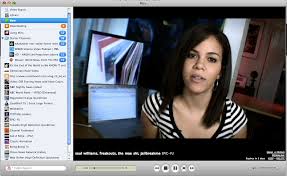
Miro (originally Democracy Player) was an early “internet TV” application that let users subscribe to video RSS feeds and automatically download new episodes from across the web, creating a personalized, channel-like viewing experience on the desktop. Instead of relying on a centralized platform like YouTube, Miro aggregated distributed videoblogs, podcasts, and independent media into a single interface, where videos arrived asynchronously and could be watched on demand, more like a curated flow than a continuous stream. In this way, it exemplified a pre-platform model of networked video—decentralized, subscription-based, and shaped by user choice rather than algorithmic recommendation.
YouTube 2005–Present
YouTube launched in 2005. Google acquired it in 2006 for $1.65 billion — then considered a huge sum. YouTube generated $60 billion in total revenue in 2025, and its ad reach of 3.35 billion users exceeds the combined populations of North America, Europe, and South America.
The creator economy on YouTube is real but deeply unequal. MrBeast (Jimmy Donaldson)— who started making Minecraft videos at 13 in 2012 — now has 469 million subscribers and annual earnings exceeding $50 million. Like Nastya has 110+ million subscribers with a total annual income (ads + sponsorships + merch + apps + licensing) at roughly $20M–$30M+ per year. These are the outliers.
The median creator with 600,000 weekly views earns roughly $1,000–$3,000 per week from CPMs alone — CPM stands for “Cost Per Mille” (“mille” = thousand). It’s the amount advertisers pay per 1,000 views or impressions of an ad. A precarious income entirely dependent on platform policy and algorithmic favor.
- Thumbnail and title as primary cinematic decisions: the thumbnail and title shape the viewing experience before a single frame is watched.
- Shift in success metrics: watch time and retention curves replace traditional critical reception.
- Algorithmic influence: rewards consistency and audience expectation-fulfillment, acting as a conservative force on experimentation.
- Early viewer drop-off as design constraint: the 20% of viewers who leave within the first 10 seconds become as important as any formal cinematic choice.
"Viral" Videos and Memes
The concept of virality has a working threshold: roughly 5 million views in a 3–7 day period. But the term borrows deliberately from epidemiology — and the underlying theory comes from evolutionary biology.
Early viral videos — the Sneezing Panda, Charlie Bit My Finger, Evolution of Dance — spread organically through email and early social sharing. Today, virality is largely engineered: PR agencies, brands, and platforms themselves optimize for spread. The accidental viral moment still happens, but it competes with a professional infrastructure built to manufacture it.
Revenue from viral reach: at 250 million views, a video might generate $500K–$1 million in ad revenue. At 150,000 views per day, roughly $450/day — with each "view" counting approximately 16 seconds of watch time. The gap between cultural impact and economic return is often vast.
- 2006 — uploaded (pre-YouTube monetization)
- 15 sec — ultra-short viral format
- 0$ (year 1) — no ad revenue (pre-Partner Program)
- 30–40M views — by ~2008
- ~55M views — cited by TIME (2010)
- 106M views — confirmed by 2011
- ~200M views — by 2014 (primary upload)
- 250M+ views — estimated with re-uploads
- $150K–$250K — estimated total YouTube ad revenue
- $0 captured early — value leaked to blogs + embeds
- $500–$5K+ — typical TV licensing per use
- TV + film — South Park, 30 Rock, Bieber doc
- 2014 film — feature mockumentary produced
- 100s of remixes — early meme circulation
- GIF loops — Tumblr/Reddit spread (no revenue)
- IP > CPM — value came from licensing + franchise
- Key lesson — viral attention ≠ captured revenue
Web Series and Performed Authenticity
lonelygirl15 (June 2006 – August 2008) was a scripted web series presented as a real video diary.
- June 2006 — series begins on YouTube
- “Bree” — presented as real teen vlogger
- ~2–3 min videos — diary-style format
- Millions of views — within weeks
- Top YouTube channel — summer 2006
- Sept 2006 — exposed as scripted fiction
- Creators revealed — filmmakers + actress (Jessica Rose)
- Audience shock — backlash + fascination
- 80M+ views — total series views (est.)
- 200+ episodes — across 2+ years
- 2006–2008 — full narrative arc
- Early monetization — YouTube revenue + brand deals
- IP expansion — spinoffs + social media storyworld
- Form invented — vlog as hybrid: real / performed
- Legacy — confessionals, influencers, parasocial media
- Key shift — authenticity becomes a style
- Key insight — belief drives engagement
- Not a bug — ambiguity is the system
Vimeo: The Artisan Alternative
Vimeo positioned itself from the start as the platform for filmmakers and artists: higher compression quality, no advertising, a curated community. Its Video on Demand model offered a direct economic alternative - no algorithm between creator and audience.
- Positioning — Vimeo as filmmaker/art platform: high-quality compression, no ads, curated community
- Model — Vimeo On Demand (VOD): creators set a rental or purchase price (e.g. $2.99–$9.99+)
- Revenue split — typically ~90% to creator / ~10% to Vimeo (after transaction fees)
- Direct purchase — viewers pay upfront (not per ad impression or CPM)
- No algorithm — discovery driven by press, festivals, and creator networks
- Audience relationship — viewer as customer, not ad-target
- Use cases — documentaries, video essays, shorts, experimental film
- Creative implication — supports niche audiences over mass scale
- Limits — requires external marketing; no built-in viral distribution
- Shift (2020s–2025) — Vimeo pivots toward enterprise video tools (SaaS), away from indie creator focus
Netflix, Big Data, and Algorithmic Cinema
Netflix changed how they are greenlit. By tracking pause, rewind, and fast-forward behavior; time of day; device; location; browsing patterns; and in-episode characteristics like color palette and scene context, Netflix built a feedback loop that connects viewer behavior directly to production decisions.
House of Cards (2013) was famously commissioned based on data showing overlap between fans of the British original, David Fincher's films, and Kevin Spacey's work. The data didn't write the show — but it determined it would be made.
Bandersnatch (2018) went further: an interactive film where viewer choices shaped the narrative in real time, and Netflix collected the choice data. The film was simultaneously a story and a research instrument.
What Data Netflix Captures:
- User actions — pause / rewind / fast-forward tracked
- Viewing context — time, day, location (IP + zip)
- Device data — phone, TV, laptop, tablet
- Search — ~3M queries per day
- Ratings — ~4M thumbs-up / interactions daily
- Behavior — browsing, scrolling, hover patterns
- In-episode data — volume, color palette, scene context
- 1,300 clusters — micro-genres / recommendation groups
- 1997 — DVD-by-mail origin
- 2026 — Warner Bros. Discovery acquisition (pending)
- Scale shift — platform → largest content owner
- Key idea — Netflix as infrastructure of global cinema
In 2026, Netflix is acquiring Warner Bros. Discovery (pending regulatory approval), a move that would make it the largest content owner in the history of Hollywood. The platform that started as a DVD-by-mail service in 1997 is becoming the infrastructure of global cinema.
Part II: What Is Networked Video?
Networked video is shaped by the conditions of its circulation: platforms and interfaces; aspect ratios and duration limits; algorithms and discoverability; attention economics. The same footage tells different stories depending on where and how it appears.
Formats and Aspect Ratios
Horizontal 16:9
Cinema, YouTube longform, Vimeo, film festivals. Frames landscape, two-shots, wide establishing. Associated with sustained attention and intentional viewing.
Vertical 9:16
TikTok, Instagram Reels, YouTube Shorts. Frames faces, close proximity, portrait. The default for mobile-first, thumb-scroll consumption. YouTube Shorts now has 2.7 billion monthly active users — matching full YouTube.
Square 1:1
Legacy social feeds, Instagram posts. A compromise format — neither immersive nor intimate. Largely displaced by vertical for video.
Variable / Experimental
Essay films, net art, installations. Aspect ratio as a formal choice rather than a platform requirement. The framing of bodies, space, and time is a compositional decision.
Aspect ratio is not neutral. It frames bodies, space, and attention differently. Shooting vertical and cropping to horizontal, or vice versa, rarely produces satisfying results — each format demands its own visual grammar.
Pacing and Attention
- Fast starts — decisions happen in the first 1–3 seconds
- Hooks — immediate visual or sonic grab
- Platform rhythm — editing tuned to feed speed
- TikTok / Reels — 1–2 sec to stop the scroll
- YouTube longform — ~15 sec hook standard
- Drop-off — ~20% gone by 10 seconds
- Compression — speed as intentional density
- Not shallow — fast ≠ simplistic
- Video essays — rigor + rapid pacing
- Key question — compression serves idea or performs urgency?
Speed does not mean shallow. It means intentional compression. Some of the most formally rigorous work in contemporary video essay practice is also the fastest-moving. The question is whether the compression serves the idea or simply performs urgency.
AI in Networked Video Production (2024–2026)
AI tools have reorganized the practical economics of networked video production:
- Automatic captions and subtitles — near-instantaneous, highly accurate for English; improving rapidly for other languages
- Aspect-ratio reframing and smart crops — tools like Adobe Auto Reframe and DaVinci Resolve track subjects across format changes
- Trailer and promo generation — AI can identify highlight moments and assemble rough cuts from longer material
- Voice cloning and synthetic narration — creators can generate their own voice reading new text, enabling rapid iteration on narration
- B-roll and image generation — tools like Runway, Pika, and Kling generate video from text or image prompts; plausible but identifiably synthetic at present
- YouTube Studio analytics — AI-driven retention analysis tells you the exact second viewers stopped watching
AI can accelerate adaptation across platforms — but editorial intent must remain clear. The danger is not that AI replaces judgment; it is that the availability of automated tools substitutes for thinking about what you are actually trying to make.
Part III: Platforms as a Strategic Decision
YouTube vs. Vimeo
YouTube
- Algorithm-driven discovery — reach is potentially unlimited but not controlled by you
- Titles, thumbnails, and metadata are primary
- Designed for ongoing publishing; consistency rewarded
- 55% creator / 45% YouTube ad revenue split
- You build an audience, but YouTube owns the relationship
- Best for: education, tutorial, essay, documentary, series
Vimeo
- Portfolio-oriented; curated community with craft focus
- Higher-quality compression; controlled playback and embedding
- No algorithm between you and the viewer
- VOD: $0.10–$0.15 per view directly to creator
- You own the audience relationship
- Best for: short films, video essays, festival work, client delivery
Streaming vs. hosting is a strategic decision, not a technical one. Ask: do I want reach or relationship? The platforms that offer maximum reach extract the most control. The platforms that offer maximum control offer the least reach. Most professional video practice involves using both deliberately.
The Emerging Model: Owned Audience
The most significant shift in networked video economics since 2022 has been the movement toward direct creator-to-audience relationships: Substack launching video, Patreon expanding video features, newsletter-based video distribution, and subscription models built on tools like Ghost or Memberful.
The logic: a creator with 5,000 subscribers paying $5/month earns $25,000/month — more than most YouTube creators with 500,000 subscribers earn from CPMs. Smaller audience, owned relationship, more sustainable economics. AI-mediated search is beginning to surface specific, authoritative voices rather than just high-volume channels, which favors this model further.
Creating a YouTube Channel as a Body of Work
Think of a channel not as a content dump but as a coherent body of work:
- Channel identity and consistency — visual language, tone, recurring format
- Playlists as narrative structures — organizing work into series that reward continued viewing
- Thumbnails as visual framing — the single image that represents the work before it is seen; a cinematic decision
- Descriptions, tags, and credits — metadata is the work's relationship to search, both human and AI
Strategy for Starting (Informed by Ali Abdaal, MKBHD, and Others)
- Make your first videos — publish 3–5 to build workflow; don't optimize yet
- Develop skills iteratively — scripting, lighting, audio, editing, distribution
- Optimize for retention — hook in the first 10–15 seconds; clear takeaway at the end
- Find your niche through making — discover it by noticing what only you can make
- Build systems — batch filming and templates if volume matters to you
- Read your analytics — retention curves tell you exactly where you lost the room
- Diversify revenue early — sponsorships, Patreon, newsletter, merchandise, consulting
Promotional Video as Authorship
Promotion is not outside the work. It is a form of storytelling. A trailer does not summarize — it invites. A teaser withholds as much as it reveals. Behind-the-scenes clips construct a specific relationship with process and maker. Micro-narratives extracted from longer projects circulate independently and bring viewers back to the source.
The promotional text around a work — thumbnail, title, description, trailer — is the first text the audience encounters. For most viewers, it is the only text they will ever encounter. Treating it as secondary is a mistake.
<
References
- YouTube Statistics 2026 — Global Media Insight
- How Netflix Uses Analytics — Neil Patel
- Netflix Q4 2025 Earnings — Variety
- Viral Video — Wikipedia
- Meme — Wikipedia
- Chasing Their Star on YouTube — NYT 2014
- Sriracha — Vimeo VOD case study
- Everybody Street — Vimeo VOD case study