Week 3 — Time Frames
To Do This Week
Read:
Prepare for Discussion sessions:
The art of cinema involves the manipulation of the viewer’s experience of time. The duration of a shot is a form of temporal framing. In Time Frames, McCloud describes how comics construct time through panels.
Consider the framed panel in a comic as a cinema shot. Wider or longer panels are like long takes, while smaller panels function like short-duration shots.
The key difference is that comics offer a spatial time-map— multiple moments visible at once—while cinema unfolds sequentially as an ever-present “now.”
What in McCloud’s visual essay inspires you to think differently about time in digital cinema, or analyze a film scene that creatively manipulates time.
Class
In-class Space Sculpting
Scott McCloud: Time Frames
- Time as expressive: frames, panels, shots, fragments.
- The frame/shot as a container of subjective time.
- Stasis versus movement within the frame.
- Duration and the long take.
- Cinema as an unfolding present.
- Timelessness and repetition.
- Looped and parallel time.
Rules of Continuity
- Establishing shot
- 180-degree rule
- 30-degree rule
- Match on action
- Motivated POV shot
- Eyeline match
- Parallel action/crosscutting
Montage Types (Eisenstein
- Metric: Editing based on fixed shot duration or frame count.
- Rhythmic: Editing guided by movement within the frame.
- Tonal: Editing driven by emotional or visual association.
- Overtonal: Combination of metric, rhythmic, and tonal.
- Intellectual: Editing to generate abstract or conceptual meaning.
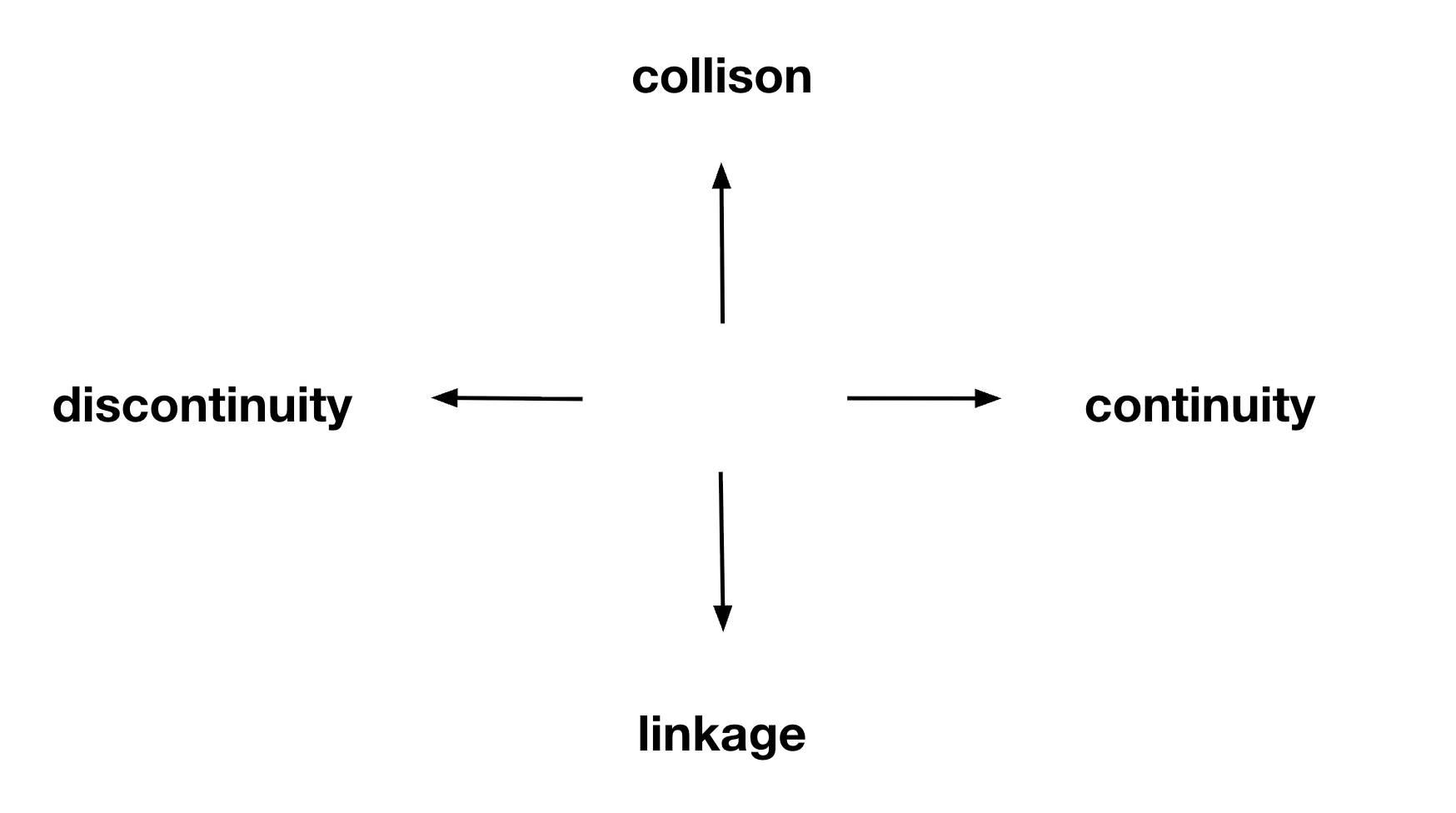
Alternating expanded and condensed time
160 Characters by Victoria Mapplebeck
Long Take
Complex Narrative Time
Citizen Kane – Breakfast Table Montage
Narrative Context:
This montage occurs after Charles Foster Kane’s marriage to Emily Norton begins to deteriorate. What begins as intimacy and political alliance gradually erodes into emotional distance and hostility. The sequence compresses years of married life into a few minutes, using repeated breakfast table setups to show the shifting dynamics of their relationship.
Parasite – Peach Allergy Sequence
Narrative Context:
The Kim family is executing a plan to remove the Park family’s longtime housekeeper in order to replace her with the father. After discovering she has a severe peach allergy, they fabricate evidence that she has tuberculosis, manipulating events so that she will be fired.
The Godfather – Baptism and Assassinations
Narrative Context:
Michael Corleone stands as godfather at his nephew’s baptism while his rivals are assassinated across the city. As he renounces Satan in the church ceremony, violence unfolds simultaneously elsewhere, consolidating his power as the new head of the family.
The Faithful Heart by Jean Epstein (1923)
Loops
Exact Repetition
Short-term memory ≈ 20 seconds
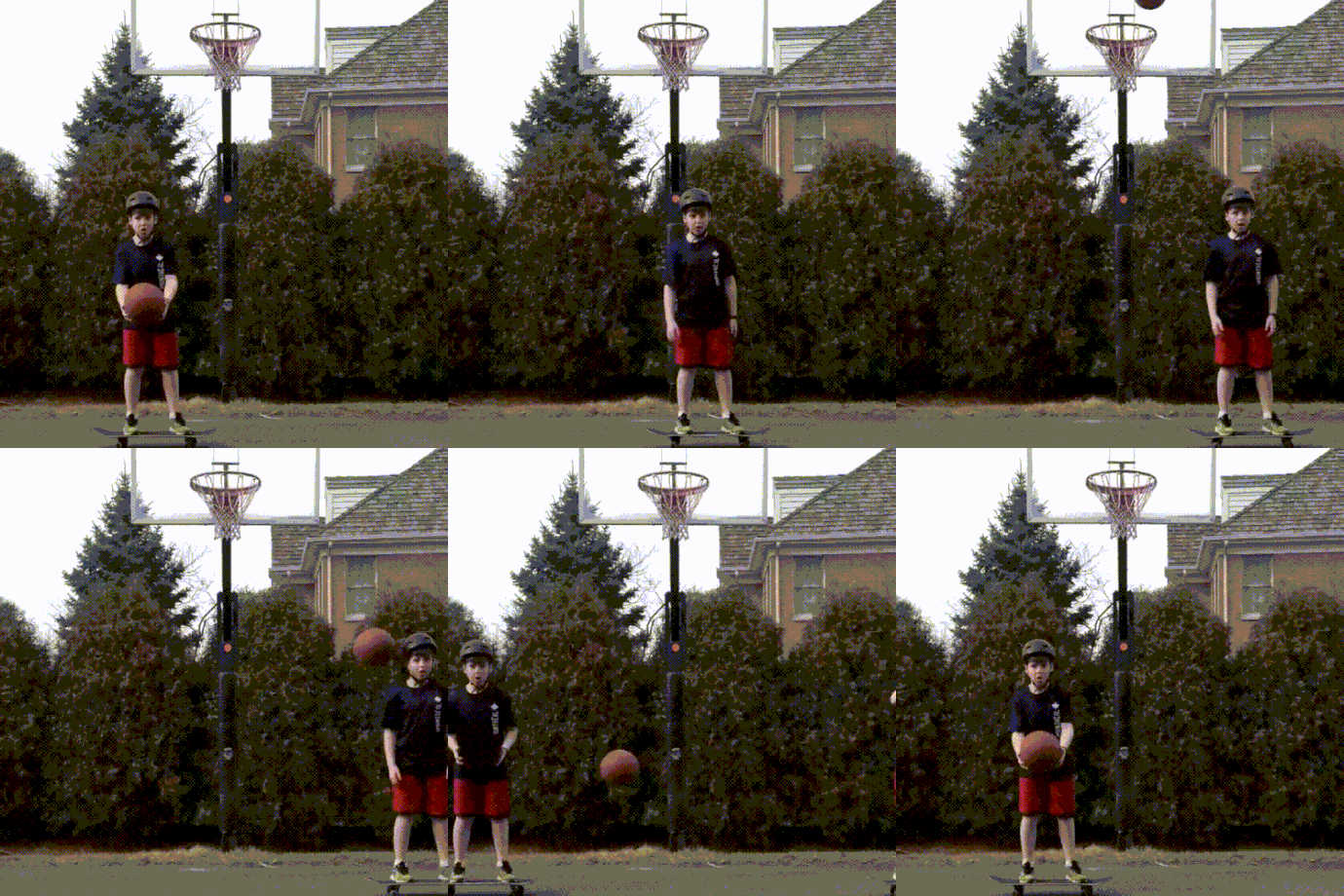
Semi-Static (Infinite Loop)
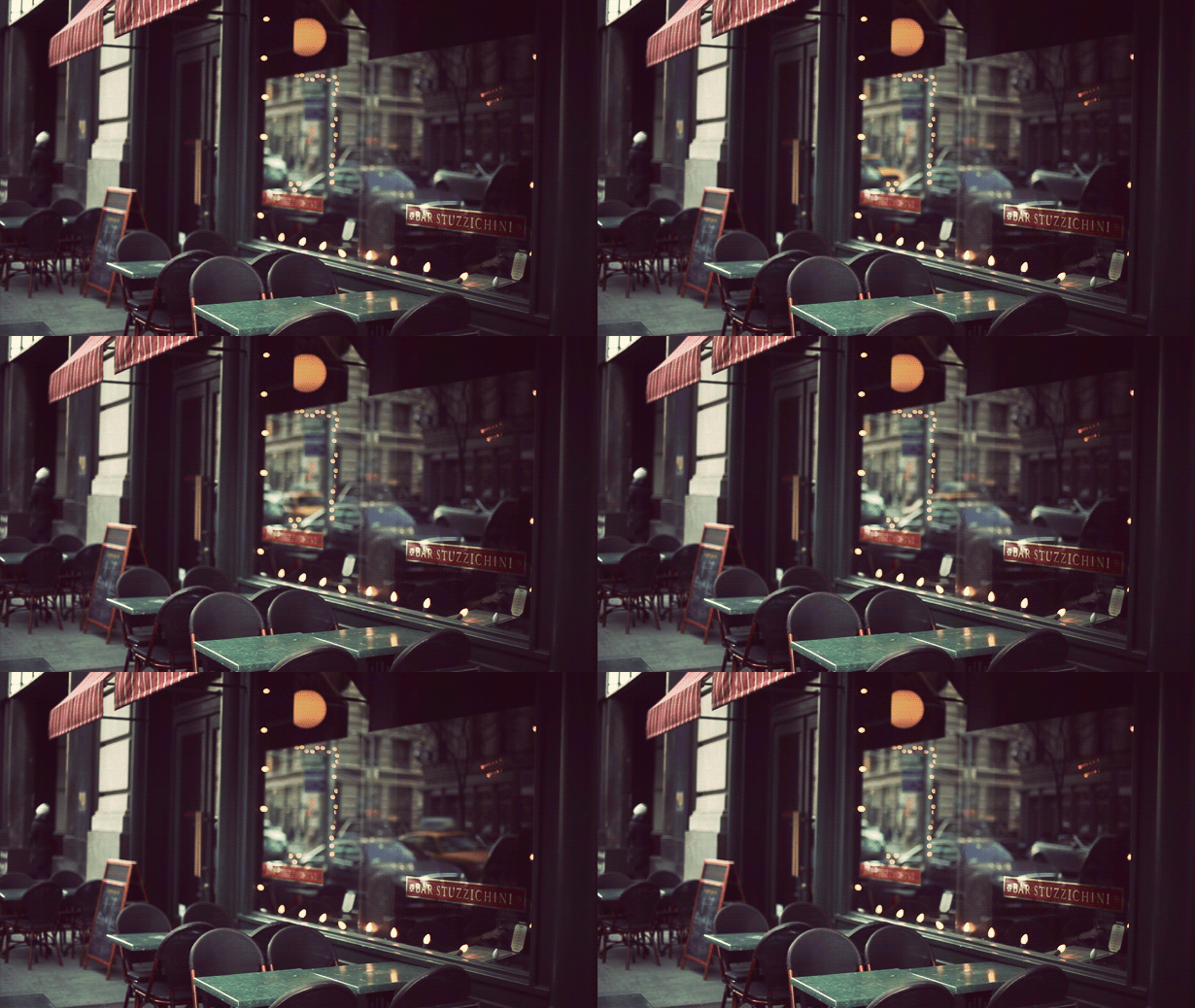
Complex Loops
Variable duration of each shot.
Loops on Social Platforms
Example: short-form transition loops.
Loops in New Media
Movement and interactivity.
Simultaneous Loops
Spatial montage = “coexisting temporalities” (Lev Manovich)
Sequential Loops
Eric Loyer calls this “temporal polyrhythms”.
The temporal map of the comic’s inter-panel progression with the various nested intra-panel movements.
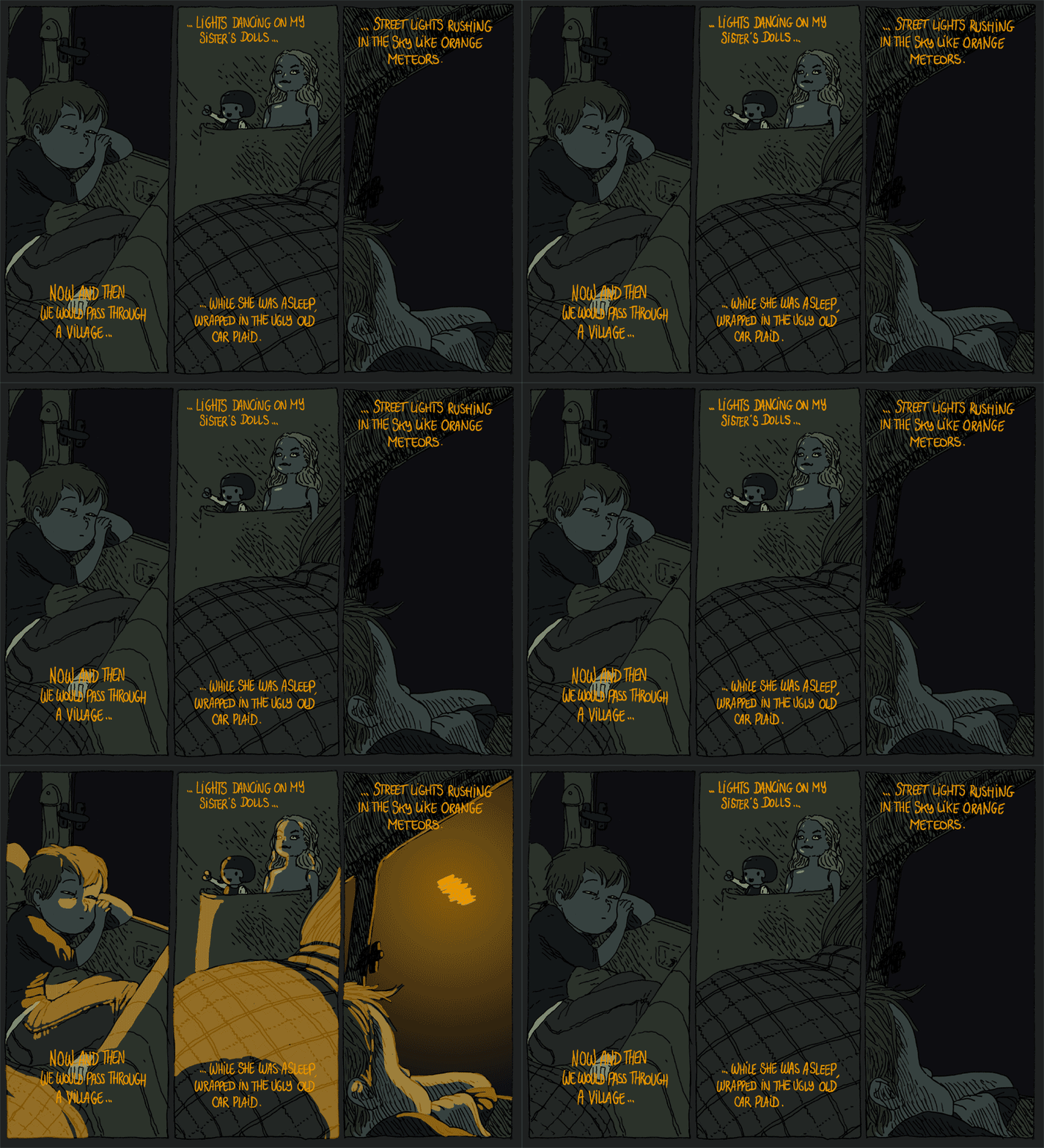
Nested Loops
An asynchronous assemblage of nested loops offers a picture of fractal time:
Simultaneous temporalities of different scales, rhythms, and durations.
Cinemagraphs
Portion of the image is in movement.
In-Class Loop Activity
In groups of 2-3, you will create 2 or 3 rapid prototype loops. Each loop will be 6–8 seconds (4-6 shots, 1-3 seconds for each) and repeated 3 times in the timeline before export.
Choose of mix and match from the following categories:
-
Continuity loop
Film a simple action that can reset. Focus on maintaining spatial unity and smooth continuity.- Examples: sitting and standing, opening and closing a door, picking up and placing an object.
- Tip: Use match on action or a consistent camera position.
-
Montage loop
Film 4–6 short shots (about 1–2 seconds each). Edit them into a rhythmic pattern and repeat the pattern.- Examples: hands, faces, objects, textures, short movements.
- Tip: Build contrast (close/wide, dark/bright, fast/slow).
-
Infinite loop
Film something cyclical and edit so the reset disappears. The end must connect seamlessly back to the start.- Examples: walking past the same background, rotating object, repeated hand gesture.
- Tip: Match direction, speed, and framing at the loop point.
-
Narrative loop (Beginning → Middle → End)
Create a tiny story arc in 6–8 seconds. The ending must feed directly back into the beginning.- Examples: try to leave → blocked → returns; reaches for object → fails → resets.
- Tip: The loop should suggest entrapment, ritual, or inevitability.
Assignment: Loops (5%)
DUE March 2nd
Objective:
Create three short video loops that explore different experiences of time through editing and repetition.
Length Requirements:
- Each loop must be 8-20 seconds long.
- Each loop must be repeated 3–5 times, with some black to separate the three loops. Export all loops in timeline for YouTube or Vimeo.
- Submit to Canvas the url and post to the class channel.
You Must Create a loop for each category:
- 1. Continuity Loop
- 2. Montage Loop
- 3. Infinite (Perfect) Loop
1. Continuity Loop
Create a loop that maintains spatial and temporal unity. The action should feel logically continuous even as it repeats. The viewer should initially experience forward movement before noticing repetition.
You may use:
- Match on action
- Shot / reverse shot
- POV structure
- Eye-line match
- Movement that resets
2. Montage Loop
Construct a loop using contrast and editing rhythm. This loop should emphasize collision, rhythm, or fragmentation rather than smooth continuity. Repetition should intensify the structure.
Try contrasts like:
- Close-up / wide
- Dark / bright
- Fast / slow movement
- Stillness / motion
3. Infinite (Perfect) Loop
Create a loop that appears seamless and endless. The final frame must connect visually and rhythmically to the first frame. Avoid visible jump cuts, obvious resets, or abrupt audio breaks.
Your loop should feel like:
- A cycle
- A mechanical rhythm
- A suspended or timeless state
Editing Requirements
- Vary shot duration intentionally to stretch or compress time.
- Duration of each shot should be between 1-4 seconds
- Sound may be used but must also loop seamlessly.
- Do not rely on filters or effects to disguise poor looping.
- The cut between end and beginning is the most important edit.
- You may use Generative AI for all or parts of this assignment.
Evaluation Criteria
- Precision of loop point (start/end relationship)
- Clarity of temporal strategy
- Control of rhythm
- Shot duration variation
- Conceptual coherence