My Work
Your Online Data
The Data Trail
Everyone uses the internet in this age of information. It has allowed us to connect and share with people previously thought impossible. A user can connect with likeminded people halfway across the globe in a blink of an eye while also having access to all of humanities knowledge in their pocket. By using the internet naturally us users leave a trail of data in our wake. Each of us having our own unique experience, each of us having our own unique data set.
For example, take an average daily user (We'll call this user Person A). Person A wakes up in the morning, usually caused by an alarm off of their smartphone. Person A after turning the alarm off sees they have notifications via social media apps and email. Depending on how much time they have alloted themselves in the morning they will immediately check those notifications. Before they know it they haven't even gotten up out of bed and they are already generating data. Every little thing Person A will do throughout the course of their day has the potential to give insight into their life via their smartphone.
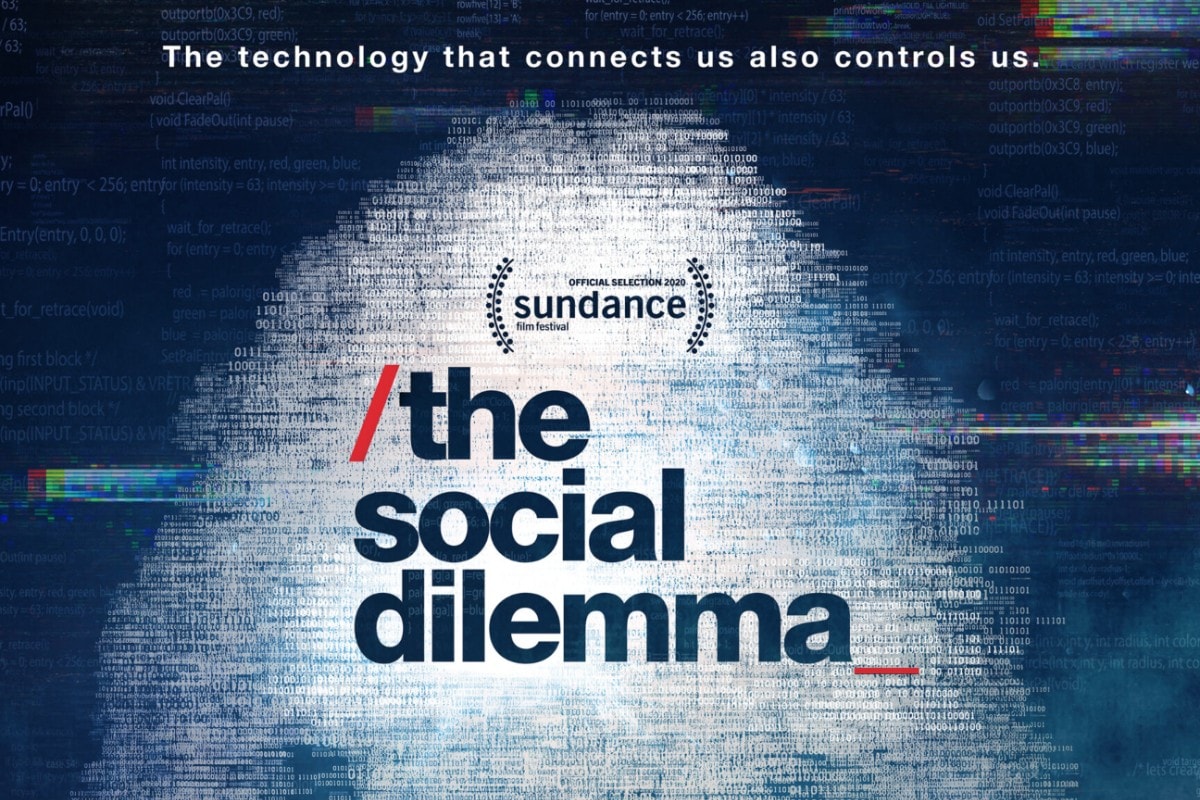
Data is primarily collected via "cookies" or little files stored on your computer containing data that remember things about your user preferences and profiles. Primarily they are the things that allow you to use a whole website without having to log in on each page, or to remember your preferences associated with your profile. These are called "Session Cookies" and will only continue to exist as long as the session does. There are also "persistant cookies" which are used to log your browser history. As the video above explains, "If you visit a bunch of shoe websites, eventually you'll start seeing ads for shoes everywhere." Alternatively websites are able to create a "Browser Fingerprint" using implanted code on your machine. These hash fingerprints are able to tell the websites information unique to you enabling them to be able to track you when you log into the website.
Now you may be thinking, why would this normally matter? And in a world where everything is sunshine and rainbows it wouldn't... But this isn't that world. This article here by the Internet Health Report does a good job of explaining data tracking. This also does a great job in reminding us that there are good sides to data tracking. Creating a personalized experience makes things easier for us as users, however I'm not so sure that the positives outweigh the negatives anymore.
Although the initial intent of the internet was positive, it has generated the most wealth of any tool ever. Since our lives have become so dependent on the internet especially with the integration of the smart phone into everyday life, companies have since turned the internet into a nefarious money making machine. No matter the pathway a user takes on the internet everything that user does is now tracked and logged into an algorithm. Creating a profile tailored to the user in order to slowly manipuate them into purchasing products via advertisements. The mass amount of data a user produces is seen as priceless to companies. There is a reason why social media websites do not require any amount of money from the user in order to create an account, "If the product is free, you are the product".
Why Your Data Matters
This form of data for sale is considered "Surveillance Capitalism". This sort of system is a combination of the foreground action, or what the user sees, and a background shadow game, or what the companies see in the form of our data. Originally all this data that is now the most valuable was once considered excess or "exhaust". In the early 2000s a few very wise individuals in Silicon Valley found that users data could be harvested and used to create algorithms in order to predict consumers behavior. The algorithms and models still used to this day were created during this time period, and the scary thing about algorithms is they don't stop improving over time.
Most think that algorithms themselves are able to make things objective, however this is not the case. Algorithms are built with a specific desire in mind and thus if executed properly they make things work for the builders. There is always a specific goal in mind when the models are made. The more data they have, the more accurate an outcome they are able to predict. Facebook and Google have gotten as close to perfecting Surveillance Capitalism/ Moreso than any of the other companies out there today. But if you want to see exactly what data each company is harvesting from you check out the website below "Who's Watching You?"

Facebook has facilitated the use of user posted photos to train facial recognition software. This facial recognition software has the capability to be sold to the highest bidder which the public has no idea who that may be. Other militarized nations could possibly use this software a la China committing mass incarceration (and maybe even genocide) to the Uyghur population in the country. Facebook has also carried out successful experiments to implement subliminal cues in the online context in order to change real world behavior, without even making the user aware they were being manipulated. This sort of power has been flexed in Australia, where a paper presented by executives described how Facebook had enough data on young people in the country to be able to pinpoint the exact moment a user of their age range would need a confidence boost. Or flexed again with Cambridge Analytica, who in their use of Facebook harvested data was able to manipulate entire election processes.
Google was essentially the founder of Surveillance Capitalism. They were the ones who pioneered this business model, and have not stopped continuing to pioneer. The popular mobile augmented reality game was another social experiment put on by Google. They wanted to find out if they could instead shift from predicting the click rate through a webpage to being able to predict "foot fall" to specific businesses in the real world. By placing desirable locations in the game at businesses essentially they were able to drive traffic to those locations. Not only was this experiment massively successful, Google went on to create smart home devices with the intent of extracting more data from your life. The Google Nest Security System when released contained a hidden microphone on the interior. This microphone couldn't be found on any of the device schematics and was hidden as much as possible. Google of course denied any intent to actually use it for data collection but nonetheless it was there. The private and personal conversations we have within the confines of our home are seen as valuable to these companies, and they are doing whatever they can to get their hands on them.
Seeing the success of this new business model many companies are competing to entry the fray of data collection. Car companies want to be able to harvest data from your vehicle, home thermostats now hold their firmware updates hostage unless you agree to the terms and conditions of their data harvesting. The same Harvard Professor in the documentary above, Shoshana Zuboff, states in this interview that Surveillance Capitalism has the potential to undermine democracy in the western world.
We have become Prey
Not only have the perpetrators of Surveillance Capitalism reaped the benefits of our data, they have come to understand that the more data they have the more profitable they become. With this in mind Silicon Valley has made it their mission to keep us online as much as possible, by targeting our primordial emotional systems. Research has shown that the reward system wired into our brains reacts to social media in differing ways. King Universities Article here describes the following:
- Positive interactions over social media stimulate our reward system and provide us with Dopamine
- These responses are similar to that of gambling or drug addiction
- Image orientated platforms can be used to decrease feelings of loneliness
Silicon Valley understands these findings and builds these results into their algorithms. They want the user to become addicted, to have a natural reliance on the platform. It has all been gamified. The user wants more likes to feel not only validated metaphorically but also biologically. The more interactions, likes, and positive feedback the more of that sweet, sweet dopamine is released. The more dopamine, the more a craving to use the platform, the more data can be harvested from the user.

Tristan Harris (pictured above), Wrote a beautiful piece describing these exact issues. Harris, once an employee of Google, has since co-founded the Center for Humane Technology in hopes of combating these predatory practices. The company hopes to bring change in the future of how our technology is operated and managed. All is not lost when it comes to these issues, as Harris says in the article, "Here’s the good news: We are the only species self-aware enough to identify this mismatch between our brains and the technology we use. Which means we have the power to reverse these trends."
Adapting
With this new found knowledge of how user's data is being tracked and how the user themselves are being preyed upon, we can find ways to adapt to this changing landscape. Adaptation is arguably the thing humans are the best at, the tricky part is getting us motivated enough to make the changes necessary. Most of the options I present here will revolve around slowing down and thinking before committing to giving up your privacy.

First lets address the data tracking. Since Google is one of the biggest offenders in Surveillance Capitalism it might be beneficial to find alternative options to their platform. Instead of immediately going to Google for a simple search use Duck Duck Go instead. Download firefox as a browser rather than Chrome, and if you absolutely have to use chrome look into a VPN service. Eliminate your browser fingerprint by deleting all cookies and history when finished browsing the web.Next time a website asks for data permissions don't be so quick to give them over.
The convenience of Amazon is hard to forgo however it's always more beneficial to you and your community if you're able to find the item you're looking for at a local brick and mortar location. Mom and Pop shops have seen such a decline because they can't afford to compete with the giant tech companies, you could help slow that decline.
The spread of misinformation on the internet has been a hot ticket item over the last few years. Users often times read a post by someone they think is trustworthy and take it as fact. This is dangerous and inhibits our critical thinking skills. Rather than committing to belief this new found information stop and research. Find out of the publishing entity is to be trusted. Attempt to see if you can find the same conclusions drawn by the post through another credible source.
Get involved in your local politics, the most fortunate part of the data tracking portion is that is has remained a lawless landscape since it's inception. It would be far more harrowing if the government was to be complicit in these actions yet for the most part no laws have tried to be enacted to combat Silicon Valley. It is up to us to make it known that we as users are not okay with what is happening with our data. Privacy is a fundamental human right not to be bought and sold by corporations.
We should also stop and think before we allow ourselves to become even more addicted to social media. The Center for Humane Technology's website has a list of potential things you can do to take back control of your technology. Ranging from turning off notifications completely to setting a day to completely disconnect from your device once a week. The most important thing in this instance is to be cognizant of how social media has the ability to influence us.