
Moving Through Me as I Move: A Paradigm for Interaction: Rita Raley – Response

In Rita Raley’s writing, she explores the connection between our bodily movements and digital spaces. She also contrasts our connection to digital spaces with that of “traditional” spaces, such as paper and pencil. On page 5 of the reading, she specifically discusses a large difference between these two: humans leave marks on the real world wherever we traverse, whereas in digital spaces such marks are absent.

“but unintentional mark-making is at the very least a sign of our human presence.”

This quote makes me think of how unintentional and intentional human mark-making has connected me to media in the past. My first thought went to old reused textbooks I would borrow for classes. As I flipped through the pages, I would occasionally see writing from past students layered over the top of the printed text. Highlight marks indicating what that person deemed important, or even small engravings left by their pencil while writing on a piece of paper atop the textbook pages. I’m not sure what it is about this, but knowing and having tangible evidence that someone else once possessed and utilized this book in the same manner as I am now connects me to it more.

The quote also makes me think about past memories of myself. When I pull out old projects from elementary school, I can see my awful handwriting and my bad spelling, and I can see how much I have grown. I feel like you can’t get the exact same thing with digital media. Digital spaces often carry an added sense of perfection, thanks to features like auto typefaces and spell check. Don’t get me wrong, I appreciate these attributes of digital spaces quite a bit; I mean, I’m using them right now. Yet, there is just something different about being able to hold proof of someone’s existence in your hands.

https://www.wbur.org/hereandnow/2019/10/25/leaving-your-mark-autograph-selfie
Posted in Reading Responses | Leave a comment

North of Boston: Matthew Kirschenbaum – Response

In “North of Boston,” Kirschenbaum discusses how the digital age of writing has affected writers in their transition into it. I was very interested in reading about Stephen King (I’m a fan of a few of his writings) and particularly excited to see “Misery” mentioned at the beginning!! However, this is not what I wanted to discuss…

“North of Boston” examines the difference between the act of traditional writing (on typewriters or pencil and paper) vs. digital writing (laptops and such). My favorite quote from this writing is “Writers are used to playing god, but now the metaphor was literalized.” Before, the act of deleting, fixing, or reformatting writing was difficult. It left markings that gave evidence of mistakes. With computers, issues can be deleted with ease, leaving no trace behind of what was corrected.

https://newrepublic.com/article/135515/technology-changed-way-authors-write

This topic sparked my curiosity. Given that digital writing facilitates easier error correction, does it potentially diminish the effort or perhaps the passion invested in the planning and preparation of stories? I compare this to the evolution of filmmaking practices. Before, a messed-up take could be greatly expensive, having to purchase more film. Nowadays, actors can make numerous mistakes during a scene without financial repercussions for filmmakers, aside from the additional time required for filming. Is it possible that actors back in the day put more effort into memorizing lines and getting a scene right in the first take?

Alternatively, it’s possible that the utilization of advanced digital technologies hasn’t compromised the quality of writing. Maybe because it makes things easier for writers, it has actually enhanced the quality. Or rather simply changed the style of most writings. I find this interesting to think about.

Posted in Reading Responses | Leave a comment

Remediation, Understanding New Media: Jay David Bolter and Richard Grusin – Response

Bolter and Grusin discuss remediation. Rather than solely concentrating on mediation, the focus shifts to remediation, implying that every instance of mediation stems from a preceding act of mediation. We are continuously growing our media, but it is never entirely “new”. It is always inspired, or based on, something existing in history. I find this very interesting, particularly because when I first heard this I thought about how this can’t be possible. I found myself thinking of “new” creations. The cell phone? Remediated multiple times from previous designs… what about Airpods? Remediated from earbuds, and now remediated multiple times by other companies for ideal design. It doesn’t solely derive from earlier versions of the same concept. Cell phones take elements from old phones and televisions. The audio technology in these digital devices traces its roots back to the phonograph, evolving through mediums such as radio and television, and now integrated into our phones.

This idea also makes me think about things outside of digital media. Notice how fashion trends are constantly circling back after a certain amount of time. It is because we are building off these trends, enhancing them to suit contemporary styles, and one day these modern concepts will be considered old and will be built off again. It’s a constant cycle of creating something, then creating a better version of that thing. The design for the tank wheel came from the need for a more efficient wheel that could traverse through different environments. Every innovation originates from a previous iteration tailored to present-day requirements and preferences. I find this a little mind-boggling, knowing that I will always be inspired by something, even subconsciously, when creating something new.

Posted in Reading Responses | Leave a comment

Understanding Comics Chapter 3, Blood in the Gutter: Scott McCloud – Response

In Chapter 3 of Understanding Comics, McCloud discusses something called “closure”, the “phenomenon of observing the parts but perceiving the whole”. He talks about this concept mostly in comics, with visual images. How we, by using closure to our advantage, can directly imply things that are not shown. The human brain is very good at assuming things and making connections to lead us to a conclusion. As I read this chapter, it reminded me of something I learned about how well our brains are able to use context, especially when we are reading English words.

Fuor Eaxmlpe, you can raed tihs wouthit a pobelrm.

That sentence is readable, even though the letters are jumbled up. That is because the first and last letters have stayed in place, so our brains are able to use context clues and assume what word is trying to be conveyed.

Y0U C4N S1M1L4RLY R34D 7H15 W17H0U7 3V3N 7H1NK1NG 4B0U7 17.

This sentence is readable, even though multiple letters have been replaced with numbers. This is because our brains can quickly identify what letters the number looks similar to, and use context to quickly decipher which word is trying to be conveyed.

https://www.livescience.com/18392-reading-jumbled-words.html

I find this extremely interesting! Our brains are so good at taking context to figure things out that we can start jumbling up words and still somehow understand it with little difficulty. However, I don’t believe this is considered “closure”. The words are all still there, each spot where a letter should be has something in its place. It’s less like filling in the blanks and more like unscrambling a riddle. I do believe, though, that this idea is a bit similar to what McCloud discusses and also does a great job of showing how well the human brain is able to assume things based on context.

Posted in Reading Responses | Leave a comment

Recovering the Multimedia History of Writing in the Public texts of Ancient Egypt: Carol S. Lipson – Response

Lipson’s writing here is quite interesting, but I specifically want to touch on one thing mentioned. Lipson suggests that the medium most ancient Egyptians used (stone) influenced what was created. This idea reminded me a lot of “The Medium is the Message,” by McLuhan, in which he suggests that the medium itself alters what is being produced. It is interesting to me because McLuhan uses this straight sentence to convey his thoughts, while Lipson provides rather intriguing evidence to his statement. I do think that what they say is true, and I like how McLuhan’s statement suggests that this concept does not only apply to writing, but to all things. This I also find to be true. For example, if you take two actors, one for television and one for live theater, and tell them to enact a happy moment, they will do it entirely differently. As well, if you tried to put the theater actor on television and vice versa, the message would not be conveyed as well.

https://octaneseating.com/blog/theater-acting-vs-film-acting/#:~:text=Film%20and%20its%20constraints%20to,be%20done%20in%20one%20take.

Though, when talking about writing specifically, I would like to question how digital media has affected what kind of writing is produced. It is hard to say if writings have become better or worse. I would suggest that it has rather just become more accessible, therefore we are seeing much more variety of kinds of writing. I also think writers are working harder on finding ways to grab the reader’s attention. With the amount of digital writing that is created each day, writers know that they have to make their writing unique in some way, otherwise readers will simply move on to find something better.

https://medium.com/@rob.wild/william-shakespearethe-impact-of-technology-on-writing-a95d7e674b0a

Posted in Reading Responses | Leave a comment

The Body of the Book: Jan-Dirk Müller – Response

Reading about people’s worries after the printing press became popular is very interesting, especially considering how it parallels with our current time, or more specifically, with the growth of the internet. In “The Body of the Book,” Müller discusses how the printing press has and may affect the future of preserved knowledge and historical documents. Because the printing press has made it so easy for more people to create and distribute writings of their own, Müller shows concern that with the amount of information being created, older, more valuable information will be left behind, buried under a pile of new media.

I can’t help but compare this to the internet. The internet has made the spread of information easier and faster. The concerns about having important information buried grow larger each day. It is no longer only people who can and want to write releasing information. The act of texting and typing has made things so much easier; therefore, more people will be more likely to do it. We release so much data every single day.

https://www.socialpilot.co/blog/social-media-statistics

With the amount of news stories, breakthroughs, and overall information being released each day, people worry that when something important really happens, it may be buried under the news of other things. In fact, people even theorize that this very issue is used to others’ advantages in order to cover up large stories. However, the biggest worry people have about using digital media to record writing is that it is not a physical media. Because of this, it is so much easier to lose or leak information. Imagine if the internet suddenly stopped working. How much of our important digital writing have we printed out? Likely, not enough.

Posted in Uncategorized | Leave a comment

Letter Perfect: David Sacks – Response

Sacks writes a lot in this book about not only the history of the English alphabet letters but also about how that history affects the way we see these letters. This is what I found the most interesting in his writing. Though letters are just shapes we have created, the history we have with them makes us associate them with certain things. For example, an S can be associated with snakes, and thus may be considered a bit evil or scary. Why? The biblical history behind snakes (Lucifer disguised as a snake tricks Eve), and just in general snakes are commonly thought to be scary. Snakes also make a “sssss” sound, and the word “snake” itself starts with an S.
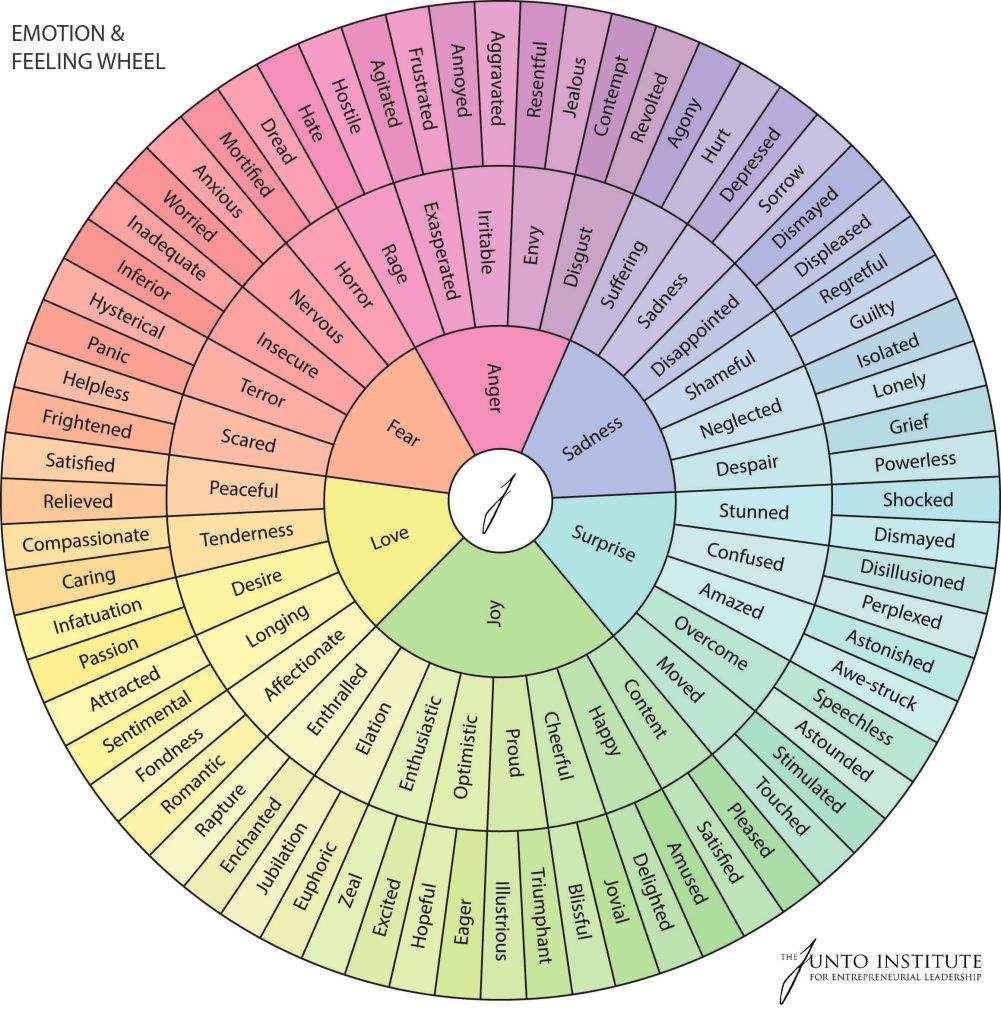
I specifically find it interesting that we associate not only objects or animals with letters but also personality traits as if they are alive. Similarly to S being seen as evil, A may be associated with importance or pride because it is the first letter in the alphabet. L might be considered a kind letter, U as shy, and so on. This is an interesting phenomenon that not only occurs in letters but really anything. The color red is associated with anger/frustration, blue with sadness or coldness. And while red is anger, pink is not, even though pink comes from red. Pastel colors are considered calm while neons are powerful. And even further, people might associate words with colors. Maybe Monday is yellow while Friday is blue. For some, the word “moist” causes a visceral reaction.


My question is, why do we do this? There are a few reasons, one I have already mentioned, which is that we correlate the history of when things are used to what they are. However, that does not make sense when we see colors as having emotions, does it? Not entirely, but you may notice they correlate with other things besides their history. For example, many people’s faces turn red when they are mad. We associate yellow with happiness because of the warmth of the yellow sun, blue with sadness because of cold weather.
In fact, knowing what color we associate with certain emotions can be very helpful in therapeutic means! Many find green to be calming, so it is suggested to paint your walls green if you suffer from anxiety. Bright colors might help with depression and so on.

https://endeavor.moffitt.org/archive/color-your-world-to-relieve-stress/#:~:text=Green%20%E2%80%93%20Quiet%20and%20restful%2C%20green,a%20powerful%20sense%20of%20calm.


All this is to say that I find the concept of personifying inanimate things to be very interesting, and I think Sacks discusses it quite a lot in his writing. For that reason, I wanted to go into a bit more depth about it. I specifically like how Sacks has honed in on these specific letters, not even words, which in the end made me want to research this idea further.

Posted in Reading Responses | Leave a comment

How Language Changes the Way We Think: Lera Boroditsky (TED-Talk) – Response

I found that Boroditsky’s TED talk made me realize quite a lot about the differences between languages and how they affect the way we view the world. Boroditsky briefly talks about how in other languages like French, if something happens by accident, when talking about it you do not involve yourself in the situation. So, if I broke my arm, I would say “The arm broke” because if I said “I broke my arm” it would imply I did it on purpose. I specifically correlated a lot of what she was talking about to Japanese culture because I am currently learning to speak and write Japanese. Just from learning a language, it’s amazing how much of the culture you learn about at the same time. That is because, I believe, language is a reflection of culture, and as Boroditsky discusses, it is built around the culture it is created in to best suit that lifestyle.

An example I have regarding the Japanese language involves using the word あなた (anata), which means “you.” Japanese culture is very polite and non-direct, but it was still surprising to learn that using this word is considered rather impolite and is a last resort to use when trying to direct your speaking to someone. Usually, a person will instead say something like すみません (sumimasen), which means excuse me, to get someone’s attention. Let’s say you see someone drop something and you want to return it. You don’t want to say “Is this yours?” so instead you would say something like “すみません、これは…” (sumimasen, kore wa…) which translates to “excuse me, this is…” and then perhaps you would gesture towards the person to indicate it belongs to them.

Not only that, but the Japanese language has multiple different levels of politeness often referred to as 敬語 (keigo), with the highest level of politeness making words sound entirely new! The level of politeness to use when speaking often has to do with the person you are speaking to’s age, status, and their relationship to you.

Overall, I find that Boroditsky makes many good points that I agree with in her presentation. Just from the fact that you can learn about cultural behaviors from learning the language, to me, is proof that language does change the way we think.

Posted in Reading Responses | Leave a comment