00
DTC 101
Digital Intelligences
"All media are extensions of some human faculty — psychic or physical."- Marshall McLuhan, Understanding Media: The Extensions of Man, 1964
Human beings have always used tools to extend what they can do. A hammer extends the arm. A map extends memory of place. A calculator extends arithmetic. Each tool changes not only what is possible but what it means to be capable.
This opening chapter of Digital Technology and Culture begins with a simple question: when a digital tool helps solve a problem, where is the "intelligence" located? A "smartphone," for example. Is the intelligence in the phone? In the person who uses it as an extension of their own intelligence? In the engineers who built it? In the culture that shaped the user, the phone, and the engineering know-how? The answer is not obvious, and it gets less obvious as the tools become more powerful.
The title Digital Intelligences is plural because digital culture contains many forms of intelligence working together: human intelligence, machine intelligence, and collective or network intelligence. Artificial intelligence is one part of this larger story, the latest development in a long history of humans building tools that think with and alongside them.
 0.1
Human, Collective, and Machine Intelligences
0.1
Human, Collective, and Machine Intelligences
We often talk about intelligence as if it belonged only inside an individual mind. Yet intelligence takes many forms. People use language, solve mathematical problems, navigate spaces, create music, understand emotions, build relationships, and adapt to changing environments. No individual possesses all of these capacities equally. Human societies depend on a diversity of talents, perspectives, and ways of knowing.
Human intelligence does not come only from biology. Humans evolved large brains, but it is tools that extended what those brains could do. Language, the library, the scientific community: each of these holds part of what a person knows, remembers, or works out. A calculator solves problems faster and more accurately than a person doing arithmetic by hand, but the calculator did not generate the problem, choose to solve it, or know why the answer matters. The intelligence at work is distributed, partly in the machine, partly in the person using it, partly in the mathematical tradition that made both possible. Human intelligence is both individual and social, and it has always been technological.
Collective intelligence emerges when many people contribute to a shared system of knowledge, such as the university system. In digital form, collective intelligence arrives with the Internet as network intelligence, in which information is shared and distributed nonlinearly: Wikipedia, open-source software communities, and online forums all demonstrate forms of collective network intelligence. No single participant knows everything, yet the network as a whole can gather, correct, organize, and distribute knowledge. Network intelligence is one of the defining features of digital culture.
Machine intelligence is the newest participant in this longer story, and it comes out of all the sharing made possible by network intelligence. Computers excel at storing information, performing calculations, identifying patterns, and processing vast amounts of data. Search engines, recommendation systems, and large language models depend on enormous collections of human-created text and images. These systems do not "think" the way people do. They can't even be said to think at all, because they have no stake in what their outputs mean. Humans bring meaning and intention in coordination with the machines. The machines return the patterns in the traces people leave behind. Their intelligence and ours are built from everything that came before.
"What magical trick makes us intelligent? The trick is that there is no trick. The power of intelligence stems from our vast diversity, not from any single, perfect principle."- Marvin Minsky, The Society of Mind, 1986
0.2
Why the Digital Matters
Start with what a digital thing is not. A digital photograph is made of pixels, but it takes eyes and a brain to see the image and feel anything about it. A text message is coded symbols, not the human conversation it carries. A profile is a record of someone, not the person. Representation can be persuasive, but it should not be mistaken for the thing it represents. Falling for this trap can lead to misunderstanding the true nature of digital intelligence.
What the digital does, then, is transform the world into discrete units that can be encoded in binary and then stored, copied, and searched. Words can become characters, tokens (units of language), and documents. Images can become pixels. Sounds can become samples. Video can become still frames. Locations can become coordinates. Social behavior can become clicks, likes, shares, views, and profiles.
Once culture becomes data, new forms of intelligence become possible. Search engines can organize information across billions of pages. Social platforms can predict attention. Translation systems can map patterns between languages. Generative AI systems can produce language, images, sound, and code from statistical relationships — which words tend to follow which — learned across massive datasets. These seemingly magical systems are actually built from the digital transformation of culture into computable forms.
0.3
Monsters and Helpers
Long before computers existed, humans imagined artificial beings. Some of these beings were monsters that escaped control. Others were loyal helpers and companions. Contemporary debates about AI inherit both traditions. When people fear the worst of intelligent technology, they draw on stories of rogue artificial creatures that turn against their makers. When people hope for the best, they imagine intelligent companions that work alongside human interests.
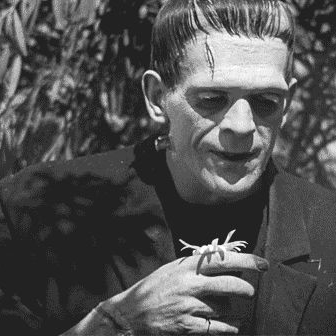
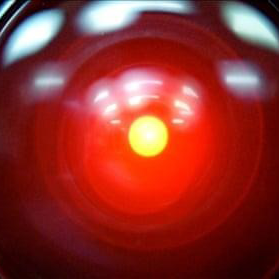
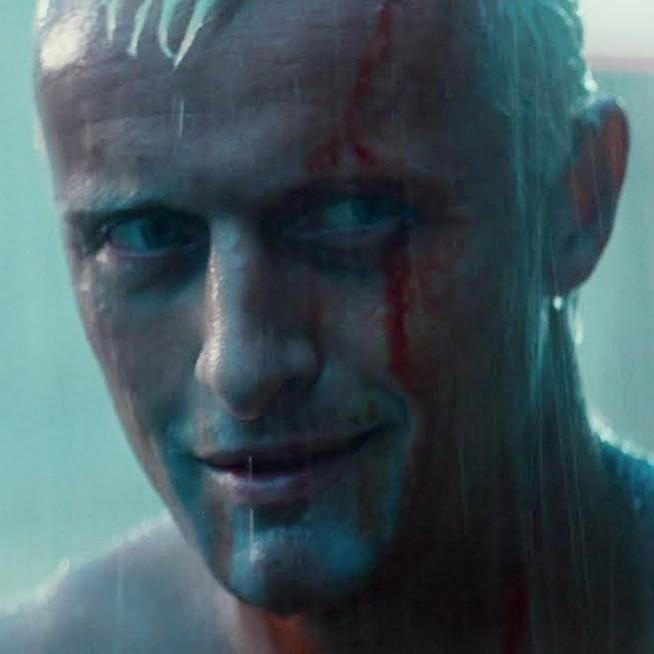
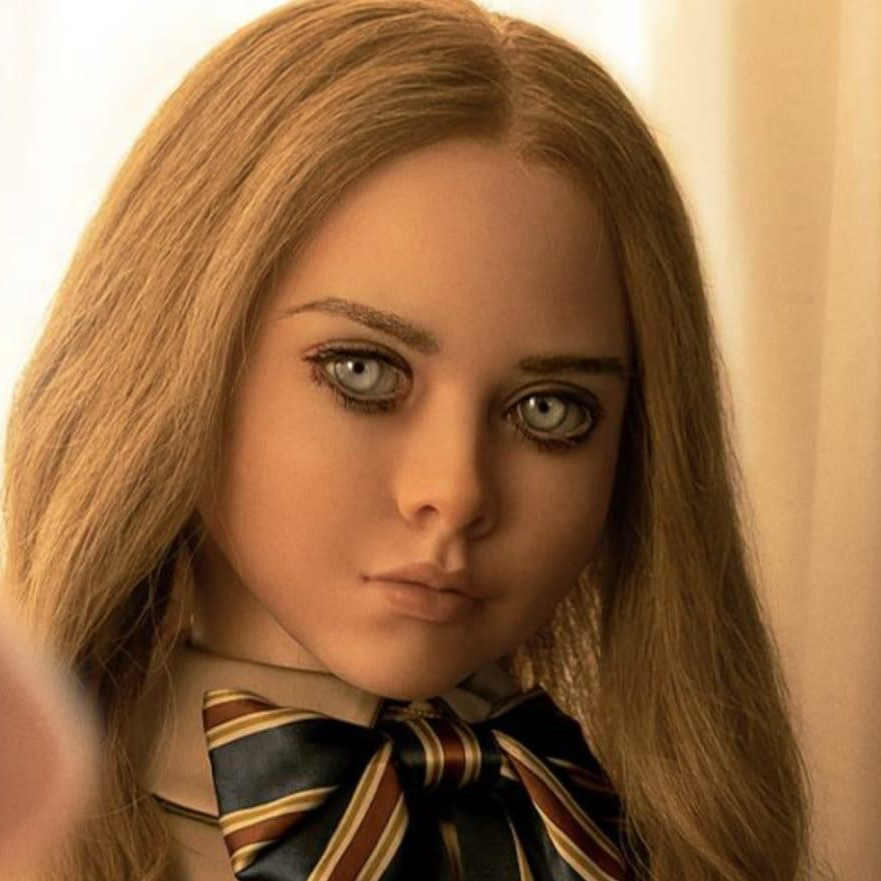
The monster tradition warns against hubris: the fear that humans will create something powerful and then lose control of it. Frankenstein's creature, HAL 9000, and M3GAN express anxieties about scientific overreach, robot rebellion, and human replacement. Roy Batty complicates the pattern — Blade Runner's most dangerous artificial being is also its most sympathetic one. These stories are not simply irrational fears. They help culture rehearse real questions about responsibility, power, and unintended consequences.
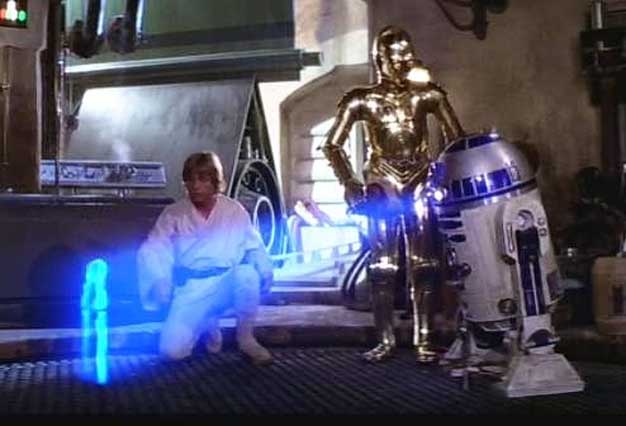
The helper tradition imagines a different relationship. R2-D2 does not need to become human in order to be valuable. It does not pretend to have a soul or replace the people around it. It helps, repairs, stores information, navigates systems, and supports action. This may be a better model for thinking about many AI tools: not as artificial people, but as powerful instruments that can assist human judgment when used with care.
Her by Spike Jonze
Spike Jonze's film Her explores what happens when a tool becomes so responsive as a helper agent that it begins to substitute for real human connection. The film does not argue that intelligent systems are evil. It asks what we lose when a tool is so capable that we stop noticing the difference. That question applies beyond AI to any technology powerful enough to reshape what we expect from each other.
Will machines destroy us or save us? This is a false binary, because it excludes our participation in the process of machine collaboration. A more productive question is how humans and machines best work together, and what that working-together asks of us. What do we lose and what do we gain? Calculators did not replace mathematical thinking and cameras did not eliminate other forms of image-making, but they did extend capabilities. Each new tool reorganizes what humans do, and what we expect of ourselves.
0.4
Creativity and Collaboration
If intelligence is distributed across people, tools, and traditions, creativity is as well. The rise of generative AI has made this all uncomfortably clear. When a model produces text, images, music, code, or video that appears to exhibit creative qualities, the question becomes harder to avoid. What exactly is creativity, and what is the human role in it?
It helps to think of creativity as a process rather than a mysterious property possessed by one person. Human creativity depends on memory, training, tools, collaboration, and risk-taking. Artists learn from other artists. Writers absorb genres and styles. Musicians practice patterns before transforming them. Designers work within traditions, constraints, and materials. No artist creates in isolation. The myth of the sole creative genius is exactly that.
The history of creative expression is one of incremental change on what came before. The painters we call revolutionary rarely invented from nothing. Picasso, Matisse, and Gauguin helped define what became "modern art," a movement that felt, at the time, like a total break from the past. But the "break" was itself inherited. Their forms came from African masks, Iberian sculpture, and Japanese prints, objects made by traditions they were encountering for the first time in the late 19th century, not inventing out of nothing. The revolution was a reencounter with what tradition had already made, seen with new eyes.
Felipe Galindo, "How Ancient Art Influenced Modern Art," TED-Ed (2016).
Where is the art in framing with a camera lens and pushing record? A camera is an intelligent tool that does a lot of the "work" of making an image. And yet, since the beginning of photography and cinema, the camera has been used by artists to make ever-novel forms. Intelligent digital tools can become part of a creative process when humans use them to extend capabilities: record audio-visual data, test ideas, or produce unexpected combinations. The value of the resulting work depends not only on what the tool produces, but on the quality of human intention, judgment, and reflection. Using an AI to simply copy, by contrast, is uninteresting in the same way that any unreflective copying is uninteresting. The tool changes, the problem does not.
0.5
Extensions of Ourselves
This chapter began with a simple claim: tools extend what people can do, and in extending what we can do they change what it means to be human. Intelligence and creativity are plural and shared. Even the monster and helper stories we tell and retell about our extensions are inherited, ways an older culture rehearsed questions a newer one is asking again.
Marshall McLuhan, whose words opened this chapter, argued that every medium is an extension of some human faculty: the wheel extends the foot, the camera extends the eye, electric media extend the nervous system itself. He insisted that the form of a medium matters more than the messages it carries, and that each new medium reshapes the people who use it. Chapter 02, on Digital Media, returns to him in more detail. Digital intelligences are the contemporary forms of this long story of extension. Digital tools are not artificial people. They are extensions of practices we have always engaged in: remembering, organizing, predicting, and communicating. What is new is the speed, the scale, and the degree to which these extensions appear to act on their own.
The chapters that follow work through these technological extensions one at a time, from the hardware and code that make digital culture possible, to the media and platforms that organize attention and labor, to the generative systems whose consequences are still being worked out.
At every stage there are real costs to attend to: attention capture, extractive labor, environmental burden, and the bias that systems inherit from the data they are built on.
McLuhan's point was never that technology determines us, only that it reshapes us. Each generation has to relearn what it means to be human with the tools it has inherited. The work ahead, in this course and into the future, is to study digital tools well enough to participate in what they are making of us, and to make something different of them in return. That is culture.
0.6
Unit Exercise: Technology Timeline
This exercise asks you to trace your own history with digital technology — not as a consumer of products, but as a person whose sense of capability, identity, and connection has been shaped by tools. The goal is to make personal experience available for critical reflection, and to bring that reflection into class discussion.
- Make a list of the digital technologies that have mattered most in your life, in roughly the order you encountered them. These might include a calculator, a video game console, a first phone, a social platform, a streaming service, a search engine, a digital camera, or anything else that changed what you could do or who you felt you were.
- For each technology, write two or three sentences: What did it let you do that you could not do before? What did it change about how you spent time, communicated, learned, or saw yourself?
- Identify one technology from your list that you now depend on in ways you did not expect when you first encountered it.
- Identify one technology from your list that disappointed you, that you stopped using, or that felt different than you expected.
- Write a short paragraph: looking at your list as a whole, what does it suggest about how digital technology has changed what it means to be capable, connected, or informed?
Discussion Questions
- What forms of intelligence do you rely on every day that are not inside your own head?
- When a tool solves a problem for you, do you feel more capable or less? Does it depend on the tool?
- Which stories — films, books, games, myths — have shaped the way you think about intelligent machines?
- What would you not want a machine to do for you, even if it could? Why?
- Who gets to decide which technologies get built, and who is affected by those decisions?
0.7
Glossary
- automation: the use of machines or software to perform tasks that previously required human action.
- collective intelligence: knowledge or problem-solving that emerges from groups, communities, institutions, or networks.
- computation: the processing of information through a sequence of instructions performed by a machine.
- data: information represented in a form that can be stored, processed, transmitted, or analyzed by computers.
- digital culture: the practices, values, and social forms that emerge from the widespread use of digital technology.
- digital intelligence: intelligence that emerges through the interaction of data, computation, networks, machines, and human culture.
- machine intelligence: computational behavior that appears intelligent because it can classify, predict, generate, or adapt based on data.
- network intelligence: knowledge or behavior that emerges through connected systems of people, machines, documents, and platforms.
- technology adoption: the process by which individuals and communities begin to use a new technology and adapt their practices around it.
0.8
Bibliography
Hayles, N. Katherine. How We Became Posthuman: Virtual Bodies in Cybernetics, Literature, and Informatics. University of Chicago Press, 1999.
Levy, Pierre. Collective Intelligence: Mankind's Emerging World in Cyberspace. Basic Books, 1997.
O'Gieblyn, Meghan. God, Human, Animal, Machine. Doubleday, 2021.
Postman, Neil. Technopoly: The Surrender of Culture to Technology. Vintage, 1993.
Rheingold, Howard. Tools for Thought: The History and Future of Mind-Expanding Technology. MIT Press, 2000.
Winner, Langdon. "Do Artifacts Have Politics?" Daedalus, vol. 109, no. 1, 1980, pp. 121–136.